"Listen, wanderer, the Great Tower Wyrm Desert ain’t no place for soft feet or faint hearts. I’ve trekked its blistering dunes, felt the ground rumble with them cursed Tower Wyrms churnin’ below, ready to swallow you whole. Jagged spires stab the sky like broken fangs, and the sun’ll bake your bones before the freezing night snaps ‘em. Tribes like the Bloodspear Tribe and Emberfang Clan brawl over scraps of water, their Kraggaz-Gutrippa rigs screamin’ through the dust, leavin’ blood and rust. Ruins like The Nightmare Maw whisper of loot, but the winds carry dead voices, and strange lights flicker where no man’s sane. Bring two blades, and don’t trust the shadows—they move when you ain’t lookin’. The desert don’t care if you live, but it’ll remember you when you’re gone."Dagnar “Blacktongue” Sirgar - Exiled Duergar Mercenary, Saloon Hand - Lynchtree
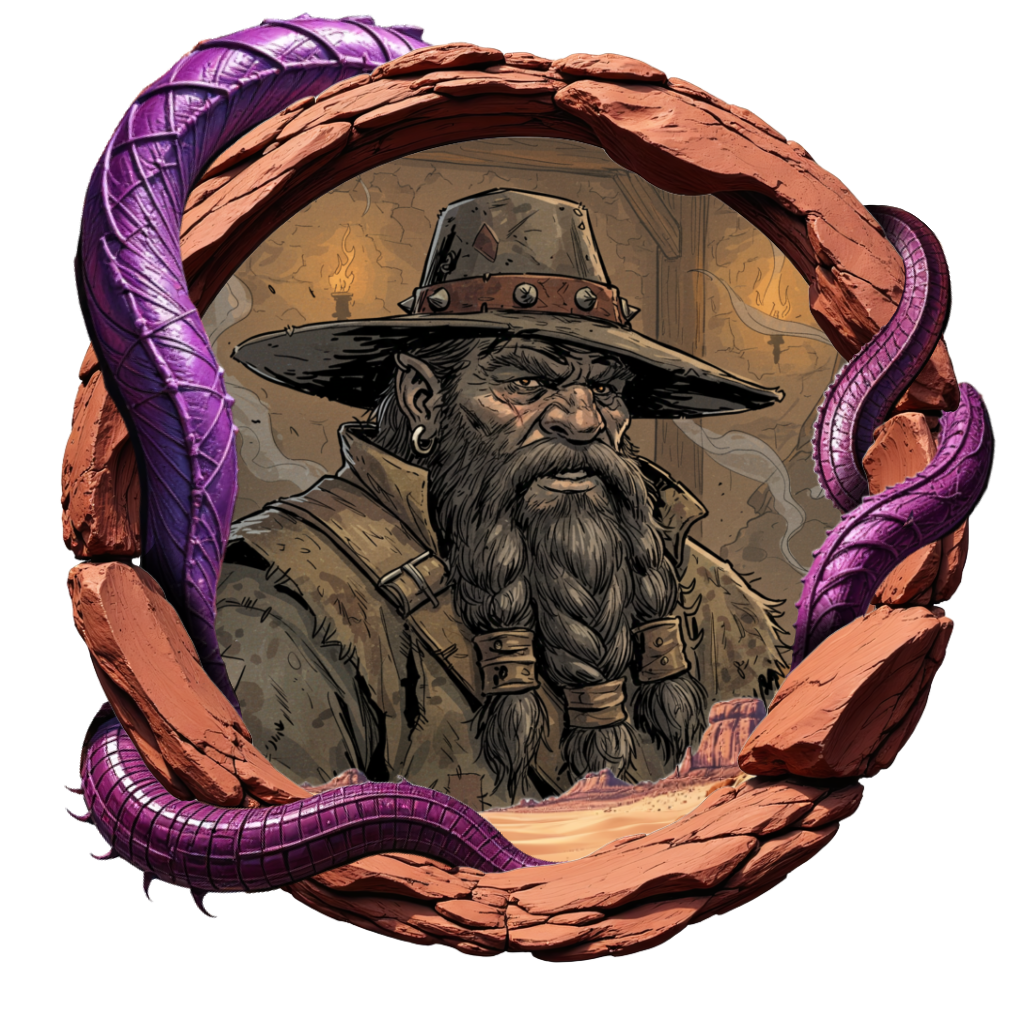
The Great Tower Wyrm Desert sprawls across Lillowen’s continent of Tessix, a vast, sun-blasted expanse stretching hundreds of thousands of square miles. Its merciless climate—searing days and bone-chilling nights—pairs with the subterranean menace of Tower Wyrms, colossal beasts that erupt from the dunes to devour the unwary. The landscape blends endless sands with volcanic canyons, dotted by ruins like Nightmare Maw and Sunken Cathedral, their cursed treasures luring desperate souls. Outsiders call it a haunted enigma: a place where the earth hungers, tribes kill without mercy, and ancient curses claim the bold. Only the most reckless dare its depths.
Its treacherous landscape is a stark contrast of endless, shifting dunes and jagged, volcanic canyons. Ancient ruins like Nightmare Maw and Sunken Cathedral pulse with cursed treasures, luring the desperate into a land haunted by spectral winds and arcane mirages. Outsiders whisper of its untamed horrors, where the earth hungers, the tribes know no mercy, and the desert’s ancient curses cling to those who dare its depths, making it a perilous prize for only the most desperate or foolhardy. The Great Tower Wyrm Desert remains an unconquered land, a testament to raw, brutal survival in the face of impossible odds, where every step is a gamble and every sunset a new threat.
Geography and Landscapes of the Great Tower Wyrm Desert
The desert’s geography defies life. Scorching days and icy nights torment its dunes, while arcane-laced sandstorms shred travelers. Nomads survive by mastering fleeting oases and trails like the Dustfang Trail, where speed alone thwarts Tower Wyrm ambushes. Jagged canyons and ancient ruins scar the land, a deadly tableau shaped by cataclysm. Bordering the warlike Tandekutaar and reptilian Sss'vraelthian Tethys, its trails deter conquest, leaving the desert a sovereign ruin.
The land’s features are both beautiful and deadly, a harsh canvas shaped by cataclysm and time. The Scorchskull Passage’s molten basalt burns boots, demanding heat-resistant gear, while the Saltshadow Run’s vast flats exhaust even the hardiest of travelers. These trails, coupled with the desert’s proximity to the warlike Tandekutaar and the reptilian Sss'vraelthian Tethys, ensure no nation dares to claim it. Instead, the land is left to roving tribes and monstrous perils that thrive in its chaos. The desert’s geography is the primary character in its own story—a brutal, beautiful, and unforgiving force that shapes every life and every conflict within its borders.
Notable Sites
-
Nightmare Maw (Dread Spires): A yawning chasm where Tower Wyrms writhe, its eerie whispers drive minds to madness. Qh’ta-Chitka revere it as sacred, but its pulsing darkness lures only the bold or foolish, risking death by Wyrm or spectral curse.
-
Ivory Reliquary (Saltscar Basin): A bone-white ruin half-buried in salt, its cursed relics tempt scavengers. Guarded by Saltskulls, its sinkholes and mirages claim most who seek its treasures, leaving only whispers of a lost age’s power.
-
Gilded Grave (Mirage Canyon): A shimmering tomb cloaked in illusions, visible under triple moons. Its dragonlord gold draws Zenyries traders, but shifting sands and hallucinogenic flora trap the greedy in a labyrinth of endless deceit.
-
Blistered Forge (Burning Talon Mesa): A dwarven smithy with eternal flames, its volcanic heat melts flesh. Emberfang Clan claim its secrets, but tremors and fiery specters guard the forge, daring only the desperate to approach.
-
Sunken Cathedral (Cactus Crown Ridge): A buried temple leaking divine curses, its crimson cacti hum with menace. Sunseers and Scorched Bone Tribe vie for its relics, risking madness from its unholy whispers.
-
Wraithway (Gloomspire Wastes): A spectral canyon where ghostly battles rage eternally. Caravans to Bast-Neferrah avoid its wailing dead, whose touch drains life, marking it a path of dread and disappearance.
-
Echo’s End (Wailing Barrens): A hollow where sound vanishes, its silence hides stalking shadows. Bloodspear Tribe shun its unnatural stillness, fearing the unseen horrors that claim those who linger too long.
Inhabitants and Current Affairs in the Tower Wyrm Desert
Savage tribes dominate the desert, their wars over water and relics unending. The Bloodspear Tribe orcs raid the Wailing Barrens with blood-painted spears, clashing with the Ironjaw Clan for trade routes to Lynchtree. Their Kraggaz-Gutrippa machines carve paths of gore. No warlord holds sway long; alliances crumble like sand. Recently, the Scorched Bone Tribe goblins, wielding necromantic relics from Sunken Cathedral, suffer Venomtongues ambushes in Cactus Crown Ridge. Their undead falter against poisoned blades, deepening the chaos.
Recent upheavals intensify the turmoil. The Scorched Bone Tribe goblins, flush with necromantic relics from the Sunken Cathedral, face constant Venomtongues ambushes in Cactus Crown Ridge, their undead minions faltering against poisoned blades. In Chameleon Flats, Xh’ek-Tok Thri-kreen and the Rusty Scimitars duel over stolen Draggz-Krakka trikes, staining the sands with blood. The Red Vultures slavers exploit the chaos, snatching captives for the slave markets of Tandekutaar, while spectral unrest in the Gloomspire Wastes, tied to the vengeful Hollow Ones, threatens all factions. The Emberfang Clan gnolls torch rivals in Burning Talon Mesa, their fiery raids clashing with the Qh’ta-Chitka defenses. Power remains fluid, with warlords rising and falling, their battles fueled by greed for Arcane Cores and ancient relics, ensuring the desert’s savage cycle of conflict endures. The desert is a place of constant struggle, where the very act of survival is a form of warfare.
Notable Leaders
-
Gromak Skullcrusher (Hobgoblins, Warlord, Twin Sun Valley): Commands Ashen Fist Army, extracting tolls with Kraggaz-Gutrippa haulers. His cunning sieges dominate trade routes, betraying allies for coin, a brutal tactician thriving in the desert’s chaos.
-
Gorgrak Bloodspear (Orcs, Chieftain, Wailing Barrens): Leads Bloodspear Tribe, painting spears with rival blood. His relentless raids near Lynchtree seek glory for Kragoth, crushing foes with savage fervor.
-
Zhul Emberfang (Gnolls, Warleader, Burning Talon Mesa): Guides Emberfang Clan, torching enemies with fiery zeal. His pyromaniac raids honor Rhogar, leaving scorched dunes as a testament to his unyielding wrath.
-
Vexa Sharpeye (Goblins, Chieftess, Chameleon Flats): Rules Rusty Scimitars, striking from shadows with rusted blades. Her silent ambushes outwit Xh’ek-Tok, securing relics through cunning in the shifting sands.
-
Kz’tar-Qhin (Thri-kreen, High Priest, Dread Spires): Oversees Qh’ta-Chitka, rousing Tower Wyrms with psionic rites. His telepathic commands guard sacred spires, executing intruders with merciless precision.
-
Gloomfang (Goblins, Shaman, Cactus Crown Ridge): Leads Scorched Bone Tribe, raising undead from Sunken Cathedral. His necromantic rites defy Venomtongues, hoarding relics to wield death’s power.
-
Torgak Ironjaw (Orcs, Warlord, Sunscald Flats): Fortifies Ironjaw Clan, guarding eastern paths to Badlands. His brutal defenses repel raiders, securing trade with unyielding strength and notched axes.
Nearest Strongholds
Outposts encircle the Great Tower Wyrm Desert, grim bastions for traders, adventurers, and exiles. These weathered holds—some independent, others tied to nearby realms—stand as the only gates to its horrors, their walls battered by sand and blood.
Notable Strongholds & Settlements
-
Zenyries (Southwestern edge, Trade Outpost): A sand-blasted trading post in Tandekutaar, Zenyries hums with Virtharr Iriebith merchants peddling water and Wyrmbone at steep prices. Its Bazaar of the Dunes and Emberwatch Tower guide caravans, while its Oasis Haven sustains 201 Dragonborn, Orcs, and Bullywugs. It trades relics with Aelinar-Vaelith centaurs, dodging Saltskulls ambushes, a vital link to the desert’s southwest.
-
Lynchtree (Eastern border, Frontier Settlement): Nestled by the Badlands, Lynchtree is a dusty outpost of wooden palisades, home to humans, dwarves, and half-orcs. Ruled by Clyde Holedigger, its Griffin’s Eye Saloon and Wyrmbone Market serve adventurers hunting Echo’s End relics. Sheriff Glog ThunkKnuckle’s militia fends off Bloodspear Tribe raids, making it a gritty hub for desert-bound scavengers and traders.
Population and Demographics of The Tower Wyrm Desert
Nomads and exiles scrape by in the desert, their lives tied to scarce water holes, ruins, and the tremors of Tower Wyrms. Tribes like the Bloodspear Tribe roam the sands, their numbers shifting with each raid. Tensions flare over resources and grudges, pitting the Vaelyztharion—cursed outcasts of Cactus Crown Ridge—against all with their necromantic blight from the Fall of the Vaelyztharion.
Tensions simmer among these disparate peoples, rooted in ancient grudges and the desperate scramble for scarce resources like water, Wyrmbone, and Arcane Cores. Orcs and Goblins clash over relic-rich ruins, their mutual distrust fueled by centuries of betrayal. The Gnolls and Thri-kreen vie for control of sacred sites, with the Emberfang Clan’s fiery raids on Qh’ta-Chitka wyrm shrines sparking bloody reprisals. Bullywugs guard their hidden wells jealously, ambushing anyone who strays too close, their territorial feuds tied to the Saltscar Basin’s dwindling springs. The Vaelyztharion, cursed exiles in Cactus Crown Ridge, sow discord among all, their necromantic rites a lingering blight from the Fall of the Vaelyztharion. Spectral Hollow Ones haunt the Gloomspire Wastes, their presence a grim reminder of ancient cataclysms, shunned even by the bold. These groups’ movements are dictated by the desert’s features, each tribe tied to the land’s curses and relics, their survival a testament to grit and guile in a desert that devours the weak.
Culture and Society of the Great Tower Wyrm Desert
The desert breeds a savage culture of blood and endurance. In the Wailing Barrens, Orcs race sleds pulled by insects, skulls of their kills clattering behind. The Sunseers of Cactus Crown Ridge dance in Bloodthorn Cactus sap, guiding caravans through the haze. Trade is a vicious clash, more theft than barter, where power shifts with every blade drawn.
Trade in the desert is a fleeting, violent affair, less a transaction and more an opportunity for a power play. Nomads barter Wyrmbone and volatile Arcane Cores at crumbling ruins like The Singing Dunes, where a deal can turn into a bloody ambush in an instant. Alliances are made and broken on a whim, with a tribe’s word being as trustworthy as the shifting sands themselves. The social structure is typically hierarchical, with leadership earned through strength, cunning, and the ability to provide for the tribe. Warlords, shamanic leaders, or the psionically gifted hold sway, their power constantly challenged by rivals. Family and clan bonds are fiercely protected, as these are the only true sources of stability in a land of chaos. Outsiders are viewed with a mixture of suspicion and predatory interest, often seen as walking resources to be plundered for supplies, technology, or captive labor.
The culture is also steeped in the macabre and the arcane. Ruins are not just sources of relics; they are sacred sites, haunted places, or sources of malevolent power. The desert is believed to be alive, a hungry entity that demands respect, sacrifice, and fear. Songs and stories are of great importance, passed down through generations to record feats of survival, ancient betrayals, and warnings of specific dangers. These oral traditions, along with the ritual scarification and body modification practiced by many tribes, serve to cement a shared identity and ensure that the harsh lessons of the desert are never forgotten. Life in the Great Tower Wyrm Desert is a continuous struggle, and its culture reflects that reality in every facet of its existence.
Enclaves/Tribal Territories of The Tower Wyrm Desert
Dread Spires (Western Central Region) Qh’ta-Chitka Thri-kreen: The Dread Spires loom as a haunting expanse of towering stone monoliths, like the fossilized fingers of buried titans, revered by the Qh’ta-Chitka, a militarized Thri-kreen colony whose hive-mind culture is steeped in psionic rituals to awaken the Tower Wyrms they worship as divine spawn of Zagawehnara, the dead Hive Queen. Their traditions center on silent vigils atop trembling spires, where warriors clad in Chitinsteel offer blood sacrifices at Nightmare Maw to appease the Wyrms’ subterranean fury, believing each tremor signals divine judgment. Internal tensions flare when young Thri-kreen question the costly rites, risking exile to the Hollow Ones, cursed wanderers whose shadowed forms whisper warnings of a coming reckoning. The Bonepickers, desperate relic-hunters, defy the spires’ sanctity, looting ruins like Obsidian Rupture, sparking deadly skirmishes with Qh’ta-Chitka patrols. Outsiders are executed without mercy, their bodies left as offerings, ensuring the Dread Spires remain a forbidden heart of the Great Tower Wyrm Desert. Trade with Zenyries is rare, limited to stolen Bloodglass, as the Qh’ta-Chitka shun external influence, their isolation reinforced by the spires’ eerie stillness and the spectral wails of Echo’s End. The Wyrmsong Resurgence of 3287 AM, fueled by Arcane Cores and Elenathril chants, has intensified their zeal, disrupting trade to Tandekutaar and deepening their rift with Sunseers, who denounce their Wyrm-worship as madness. This enclave’s culture is a grim vigil, bound by faith and fear, where every ritual is a defiance of the desert’s hunger.
Notable Settlements or Sites within Dread Spires
-
Nightmare Maw (Central Abyss): Holy Wyrm nest pulsing with Zagawehnara’s wrath, where blood offerings rouse titanic Wyrms.
-
Shatterstone Ring (Eastern Edge): Fractured battleground of colossal bones, a scavenger’s prize and warrior’s tomb.
-
Echo’s End (Northern Hollow): Silent void where sound dies, whispers pierce minds, a place of dread.
-
Obsidian Rupture (Southern Waste): Shattered glass field with ancient weapons, radiating cursed heat.
-
Black Altar of Urithrax (Shifting Shrine): Blood-scarred monolith for Wyrm cultists, appearing to the lost.
Saltscar Basin (Northwest, Near Lofty Peaks and Aerlon) Saltskulls Bullywugs: The Saltscar Basin, a blinding wasteland of cracked salt flats and sunken caverns, is a graveyard of a lost sea, ruled by the Saltskulls, Bullywug water-hoarders whose culture thrives on ruthless territoriality and cunning traps woven from salt and venom. Their traditions revolve around guarding hidden wells in Saltspire, crafting deadly snares with Venomroot Extract to enslave trespassers, their survival a testament to brutal adaptation in a land of scarcity. Internal strife erupts when Saltskulls elders hoard water, sparking rebellions among younger warriors who risk death in the Ivory Reliquary for relics to trade with Zenyries. The Zsik-Qharal, berserkers shattered by the Echoing Heartstone, clash with the Saltskulls, their suicidal war-rigs blazing through the flats in chaotic raids, worshipping ruin over order. Aelinar-Vaelith centaurs, swift nomads, offer guidance to outsiders but demand steep tolls, their aloofness a source of tension with Saltskulls ambushers. The basin’s Brine’s End lures desperate traders with ghostly whispers, but its mirages and sinkholes ensure most vanish. The Saltspire Treachery of 2043 AM, where a Tabaxi betrayed Aelinar-Vaelith to Zsik-Qharal, hardened the basin’s distrust of outsiders, limiting trade to rare exchanges of Sunshard Ore with Aerlon. The Vaelyztharion’s necromantic taint, lingering from the Fall of the Vaelyztharion in 63,500 ER, poisons wells, fueling Saltskulls paranoia and their fierce resistance to external influence, making the basin a treacherous crucible of survival.
Notable Settlements or Sites within Saltscar Basin
-
The Furnace (Southern Gorge): Molten rift tied to the Plane of Fire, a scorching lure for relic-seekers.
-
Brine’s End (Western Ruin): Salt-crusted outpost haunted by whispers, a fleeting hub for traders.
-
Ivory Reliquary (Buried Depths): Bone-built ziggurat of lost magic, a prize for the mad.
-
Saltspire (Hidden Cavern): Saltskulls watery stronghold, a lair of poison and plots.
Twin Sun Valley (Southern Desert, Between Mirage Canyon and Cactus Crown Ridge) Ashen Fist Army Hobgoblins: The Twin Sun Valley, a brutal expanse where mirrored cliffs cast the illusion of twin suns, forges a culture of relentless strength and greed, dominated by the Ashen Fist Army, a disciplined Hobgoblin mercenary force led by Gromak Skullcrusher. Their lives revolve around rigorous training and the pursuit of coin, wielding Kraggaz-Gutrippa haulers to extract tribute from trade routes, their iron-clad loyalty to gold often leading to betrayal of fleeting allies. Rituals include brutal duels under scorching light, where victors earn command of Skraggaz-Rakk runners, proving might in the valley’s crucible. Internal tensions flare when contracts falter, with younger Hobgoblins challenging Gromak’s rule, risking banishment to the dunes. The Emberfang Clan, fire-worshipping Gnolls, ignite rivalries with their chaotic raids, setting dunes ablaze in devotion to Rhogar, clashing over Razor Ridge. The valley’s Black Ruin, a spectral fortress, lures treasure hunters, but its ghostly legions repel all, fueling grim tales of lost wealth. Trade with Zenyries involves Wyrmbone and Arcane Cores, but the Ashen Fist Army’s treachery, rooted in the Bloodsand Accord of 3275 AM, keeps outsiders wary. The Coreveil Rift of 3272 AM intensified their greed, drawing Dravaxan’s draconic gaze, yet the Ashen Fist Army resists external sway, their fortified Iron Maw Bastion a defiant stand against the desert’s chaos, where only the strongest thrive.
Notable Settlements or Sites within Twin Sun Valley
-
Iron Maw Bastion (Southern Cliffs): Fortified Ashen Fist Army stronghold, guarding trade routes, impenetrable save by betrayal.
-
Razor Ridge (Central Outpost): Contested fort littered with bones, shifting between Ashen Fist Army and Emberfang Clan.
-
Black Ruin (Buried Depths): Haunted fortress with spectral warriors, a deadly lure for treasure seekers.
Cactus Crown Ridge (Southeast, Bordering Northern Atford Lake) Sunseers Druids: The Cactus Crown Ridge, a labyrinth of jagged stone and towering Crimson Cacti, pulses with a culture torn between life and death, led by the Sunseers, a Tabaxi druidic order devoted to Aelorina. Their traditions center on sun-worship, using Bloodthorn Cactus sap for prophetic trances and healing, their barefoot treks through thorny fields a sacred communion with the desert’s spirit. Internal strife brews when visions clash, with younger Sunseers defying elders to explore Sunken Cathedral, a cursed temple said to imprison a forgotten god, risking divine wrath. The Scorched Bone Tribe, Goblin necromancers, raise undead to seize the ridge’s relics, their Acharon-fueled rites clashing with Sunseers radiance, while Vaelyztharion, vulture-like exiles, drain life in dark rituals, their blight from the Fall of the Vaelyztharion in 63,500 ER tainting springs. The Sunseers trade Bloodthorn Sap with Lynchtree, but their mediation efforts falter against Scorched Bone Tribe ambushes, as seen in the Red Dune Clash of 1345 VE. Their resistance to Tandekutaar’s influence preserves their autonomy, with Cactus Crown Ridge a sacred nexus where visions guide survival amidst the desert’s deadly allure.
Notable Settlements or Sites within Cactus Crown Ridge
-
Sunseers Encampments (Ridge-Wide): Scattered druidic camps wielding sun magic, seeking visions in Bloodthorn Cactus sap.
-
Scorched Bone Tribe Warrens (Cacti Fields): Necromantic goblin lairs raising undead, entrenched and feared.
-
Sunken Cathedral (Deep Ridge): Buried temple of a trapped god, luring mystics with howling winds.
Mirage Canyon (Southwest, Near Lofty Peaks and Tandekutaar) Venomtongues Bullywugs: The Mirage Canyon, a twisting labyrinth of sandstone cliffs and shifting sands, is a treacherous expanse where illusions warp reality, ruled by the Venomtongues, a Bullywug assassin cult whose culture thrives on deception and lethal precision. Their traditions revolve around crafting Venomroot Extract from the canyon’s hallucinogenic flora, brewing toxins that drive prey mad before death, their silent kills honed in the shimmering chaos of Phantom Oasis. Internal tensions erupt when ambitious Venomtongues hoard venom caches, sparking deadly duels for leadership, with losers cast into the canyon’s depths. The Rusty Scimitars, Goblin raiders, compete with trap-laden ambushes, their stolen blades clashing over Gilded Grave, a mirage-city tied to Aelorina’s mysteries. The Stormscale Skirmish of 3250 AM, where Krirvaxoboth’s lightning scarred the canyon, fuels their distrust of Tandekutaar’s dragons, limiting trade to rare exchanges of Bloodglass with Zenyries smugglers. The Vaelyztharion’s necromantic taint, lingering from the Fall of the Vaelyztharion in 63,500 ER, amplifies the canyon’s illusions, making it a death trap where the Venomtongues resist external influence, their culture a dance of poison and shadows that defies the desert’s gaze.
Notable Settlements or Sites within Mirage Canyon
-
Phantom Oasis (Illusory Trap): Cursed mirage promising water, ensnaring travelers in despair’s endless spiral.
-
Gilded Grave (Spectral Ruin): Shimmering dragonlord tomb, luring seekers with illusory gold.
-
Sunken Reliquary (Transient Shrine): Vanishing temple echoing forgotten hymns, appearing in sandstorms.
Burning Talon Mesa (South-Central Desert) Emberfang Clan Gnolls: The Burning Talon Mesa, a scorched plateau of basalt cliffs and sulfuric vents, is a hellscape where fire reigns, dominated by the Emberfang Clan, Gnoll pyromaniacs led by Zhul Emberfang who worship Rhogar’s fiery spirit. Their culture centers on rituals of purification through flame, anointing warriors in fire before raids, their “Harraka! Harraka!” cries echoing as they torch foes with Firethorn Resin in Searing Plateau. Internal strife ignites when zealots push for self-immolation, clashing with Zhul’s pragmatic leadership, risking schisms. The Qh’ta-Chitka challenge their claim to Blistered Forge, a dwarven ruin with eternal flames, while Mire Rats scavenge its edges, sparking fiery reprisals. The Corestorm Reckoning of 3097 AM, which roused Tower Wyrms, fuels their belief in a fiery apocalypse, drawing Tandekutaar’s wary traders for Obsidian Shards. The Emberfang Clan resists external control, their raids a chaotic defiance of Ashen Fist Army’s order, making the mesa a crucible of flame and faith where only the bold endure.
Notable Settlements or Sites within Burning Talon Mesa
-
Searing Plateau (Northern Edge): Blazing ground where initiates prove faith through molten trials.
-
Blistered Forge (Central Ruins): Dwarven smithy with undying flames, haunted by spectral smiths.
-
Tomb of the Last Sun (Underground Labyrinth): Fire-lit crypt whispering promises of power or doom.
Gloomspire Wastes (North, Bordering Bast-Neferrah and the Tower Wyrm Desert) Bone Gnashers Gnolls: The Gloomspire Wastes, a blighted sprawl of blackened mist and shattered ruins, is a graveyard of a lost empire, ruled by the Bone Gnashers, Gnoll necromancers whose culture revels in undeath and eternal war. Led by no single warlord, their traditions center on binding spirits to their warbands through dark rites, stitching together Storm-Touched Bone to raise spectral warriors in Wraithway, their lives a grotesque hymn to a battlefield that never rests. Internal tensions flare when shamans vie for dominance over necromantic lore, with failed aspirants cast to the Veilborn, wraith-like wanderers whose whispers mark the living for oblivion. The Bone Gnashers clash with Qh’ta-Chitka over Obsidian Veins, their undead clashing with psionic blades, while their raids disrupt Bast-Neferrah trade routes, fueled by the Fall of the Obsidian Veil in 3000 VE, which left the wastes cursed. Trade is rare, limited to Dust of Forgotten Names bartered with Lynchtree’s Graveborn Cartel, as the Bone Gnashers shun outsiders, their necromancy a shield against external influence. The Wyrmsong Resurgence of 3287 AM has stirred their rituals, amplifying spectral unrest, making the wastes a haunted crucible where the past consumes the present, and only the damned endure.
Notable Settlements or Sites within Gloomspire Wastes
-
Wraithway (Central Canyon): Haunted battlefield where ghostly wars replay, drawing souls to eternal conflict.
-
Wailing Sepulcher (Eastern Crypt): Ruined temple of screams, guarding a lost royal line’s curse.
-
Obsidian Veins (Southern Ruins): Melted city of fused bones and weapons, a silent apocalyptic relic.
Chameleon Flats (Eastern Central Region) Xh’ek-Tok Thri-kreen: The Chameleon Flats, an ever-shifting expanse of bioluminescent sands and treacherous illusions, is a kaleidoscope of deception, dominated by the Xh’ek-Tok, a disciplined Thri-kreen warband whose culture thrives on telepathic precision and silent ambushes. Their traditions center on formation combat, using the flats’ acoustic quirks and glowing sands—violet at dawn, gold at dusk—to strike unseen, their scorn for lesser tribes a badge of pride on Whisperwind Plateau. Internal strife brews when rogue warriors defy the hive-mind, risking exile to scavenge with Mire Rats, Goblin tricksters who sabotage and steal in Dune Hollows. The Xh’ek-Tok clash with Rusty Scimitars over Hollow Veil, their blades meeting goblin traps in deadly duels, fueled by rivalries from the Goblin Ignition of 3188 AM. Trade with Lynchtree is scarce, limited to Chitinsteel exchanges, as the Xh’ek-Tok resist Tandekutaar’s influence, their isolation deepened by the flats’ sinkholes and mirages. The Coreveil Rift of 3272 AM has drawn their attention, with Arcane Cores t
Notable Settlements or Sites within Chameleon Flats
-
Whisperwind Plateau (Northern Ridge): Xh’ek-Tok stronghold, where telepathic warriors plan silent ambushes.
-
Dune Hollows (Central Dunes): Mire Rats lairs, goblin traps hidden in shifting sands.
-
Hollow Veil (Northern Mirage): Illusory trap of lost faces, swallowing travelers into the unseen.
Wailing Barrens (Eastern Desert, Near the Verdant Steppes) Bloodspear Tribe Orcs: The Wailing Barrens, a desolate sprawl of shifting dunes and spectral winds, is a haunted expanse where the cries of the lost echo, dominated by the Bloodspear Tribe, a fierce Orc warband led by Gorgrak Bloodspear. Their culture thrives on bloodshed, with rituals of painting spears with the blood of foes, their frenzied hunts across Howling Canyons a sacred offering to Kragoth, the orc god of slaughter. Young warriors prove themselves by impaling enemies, their kills displayed as trophies, but internal strife brews when ambitious chieftains challenge Gorgrak’s rule, risking exile to the Sand Howlers. The Tik-Cha’qir, Thri-kreen assassins, strike silently with venomous blades, clashing over Weeper’s Hollow, while Sand Howlers, Gnoll wind-worshippers, raid with creaking skiffs, their ancestral howls fueling feuds rooted in the Crimson Fang Betrayal of 1800 AM. Trade with Lynchtree is limited to Wyrmbone, as the Bloodspear Tribe distrusts outsiders, their raids disrupting Verdant Steppes caravans. The Wyrmsong Resurgence of 3287 AM has intensified their fervor, with Echo’s End’s silent curse amplifying their dread, making the barrens a crucible of slaughter where only the fiercest survive.
Notable Settlements or Sites within Wailing Barrens
-
Howling Canyons (Central Ravines): Jagged paths where Bloodspear Tribe hunts, echoing with war cries.
-
Weeper’s Hollow (Central Basin): Sunken pit of musical wails, luring victims to unseen horrors.
-
Echo’s End (Western Void): Silent curse where sound dies, stalked by shadowed figures.
-
Shifting Sepulcher (Northern Ruin): Moonlit necropolis vanishing at dawn, a dragonborn relic.
-
Singing Dunes (Eastern Rise): Humming sands whispering ancient tongues, hiding unseen listeners.
Sunscald Flats (North-Central Desert, South of Gloomspire Wastes) Thunderhooves Minotaurs: The Sunscald Flats, a cracked wasteland of blinding light and searing heat, is a crucible where the sun judges all, ruled by the Thunderhooves, Minotaur warriors who see the flats as a sacred proving ground. Their culture centers on brutal duels under the unrelenting sky, with warriors like Korath Thunderhoof earning divine favor through combat, their horns blaring defiance in Pillars of the Forgotten. Internal tensions arise when young Minotaurs defy elders, seeking glory in Black Hollows, risking possession by its cursed shadows. The Ka’Zek-Thal, Thri-kreen zealots, hunt with psionic war-skimmers, clashing over sacred sites, while Dustborn, human exiles, scavenge bones, their stubborn survival clashing with Thunderhooves pride. The Coreveil Rift of 3272 AM draws Ka’Zek-Thal to Arcane Cores, sparking raids, but trade with Lynchtree for Sunshard Ore is rare, as Thunderhooves resist Bast-Neferrah’s influence. The flats’ salt mirrors and dark pits, tied to the Corestorm Reckoning of 3097 AM, make it a land of trial where only the strongest endure the sun’s gaze.
Notable Settlements or Sites within Sunscald Flats
-
Pillars of the Forgotten (Central Spires): Sacred dueling grounds where Thunderhooves prove might.
-
Black Hollows (Southern Pits): Light-swallowing craters, cool but cursed, feared as shadow portals.
-
Dustborn Camps (Scattered Sites): Human exile camps, scraping survival from bone and ruin.
Religion and Beliefs of the Great Tower Wyrm Desert
Faith in the Great Tower Wyrm Desert is a shattered mosaic. The land’s cruelty forges beliefs as sharp as its dunes. Superstitions rule its people, from taboos against touching Tower Wyrm bones to rituals warding off spectral winds. These creeds fuel endless tribal wars, each clash a testament to the desert’s unyielding grip.
Superstitions grip all who live in the desert. Carrying a piece of Wyrmbone is believed to ward off wyrms, while speaking certain names in places like Echo’s End is a taboo that is said to invite doom. Taboos forbid entering Nightmare Maw without an offering, lest the sands swallow the reckless. These beliefs serve a practical purpose, providing a framework of rules to follow in a lawless land. The Bloodspear Tribe orcs paint their spears with the blood of their enemies to appease Kragoth, a bloodthirsty deity, turning their raids in the Wailing Barrens into a holy war to prove their worth. The Scorched Bone Tribe goblins practice necromancy, raising undead to serve the malevolent legacy of Acharon, their magics a shield against Cactus Crown Ridge’s perils. The Rusty Scimitars whisper to a forgotten trickster god, Malkan, before ambushes, believing cunning and deceit will ensure their victory.
These clashing creeds spark feuds and define the tribal conflicts. The desert’s legends—of wyrms as gods, ruins as cursed vaults, and Arcane Cores as cataclysmic keys—unite its people only in their shared dread. Common practices include carving sigils into flesh to bind spirits and ward off evil, and nomads avoid the Gloomspire Wastes at night, fearing the spectral Hollow Ones steal souls. Faith here is raw, practical—offerings calm tremors, curses fend off rivals, and sacred sites anchor a tribe’s existence with a potent mix of awe and terror, tying each tribe to a desert that demands devotion or destruction.
Deities/Spirits of the Tower Wyrm Desert
-
Zagawehnara (Neutral, Insect Sovereignty): Dead Hive Queen revered by Qh’ta-Chitka Thri-kreen, seen as mother of Tower Wyrms. Her followers offer blood at Nightmare Maw, believing psionic rites awaken her divine spawn. Their silent vigils in Dread Spires seek her guidance, but trespassers face swift execution, as her wrath stirs the sands against the unworthy.
-
Rhogar (Chaotic Evil, War and Fire): Slain war god fueling Emberfang Clan gnolls’ pyromania. His fiery sword inspires blazing rituals in Burning Talon Mesa, where devotees burn foes to gain his favor. Those who defy him face scorched fates, their screams echoing as warnings to honor his destructive legacy.
-
Acharon (Neutral Evil, Death): Fallen Reaper guiding Scorched Bone Tribe goblins. Their necromantic rites in Cactus Crown Ridge raise undead to hoard relics, believing his power defies the desert’s toll. Displeasing him risks spectral curses, binding souls to eternal servitude in the sands.
-
Kragoth (Chaotic Evil, Slaughter): Orc god of unblinking wrath, driving Bloodspear Tribe and Ironjaw Clan to bloody raids in Wailing Barrens. Warriors offer kills to his sleepless eye, seeking strength. His displeasure brings relentless misfortune, stranding foes in Wyrm-haunted dunes.
-
Aelorina (Chaotic Neutral, Wilds and Sea): Wild Wanderer aiding Sunseers druids. Her essence guides visions through Bloodthorn Cactus sap, ensuring survival in Cactus Crown Ridge. Devotees revere her duality, but ignoring her wild laws risks being lost to mirages and storms.
-
Malkan (Lawful Evil, Conquest): Goblin warlord god uniting Rusty Scimitars and Mire Rats. His followers in Chameleon Flats pray for cunning before ambushes, offering stolen blades. Defying him invites betrayal, leaving warriors vulnerable to the desert’s traps.
-
Fire’s Last Scream (Chaotic Neutral, Fire): Primordial titan inspiring Emberfang Clan. Its volatile flames fuel their arson in Burning Talon Mesa, seen as a chaotic gift. Worshippers risk self-destruction, while its wrath ignites sudden blazes, consuming the careless.
Sacred/Forbidden Sites of the Great Tower Wyrm Desert
-
Nightmare Maw (Dread Spires): A black chasm pulsing with Tower Wyrm tremors, sacred to Qh’ta-Chitka as Zagawehnara’s nest. Blood offerings appease her wrath, but entering without tribute risks madness from whispering voices. Its depths hide ancient evils, luring the bold to their doom.
-
Blistered Forge (Burning Talon Mesa): Dwarven ruin with eternal flames, holy to Emberfang Clan for Rhogar’s fiery echoes. Its molten heart holds lost smithing secrets, but trespassers face searing heat and spectral smiths, guarding their craft with vengeful fury.
-
Sunken Cathedral (Cactus Crown Ridge): Buried temple of a trapped god, revered by Scorched Bone Tribe for Acharon. Its howling winds promise necromantic power, but divine curses strike intruders, binding their souls to the desert’s relentless grip.
-
Gilded Grave (Mirage Canyon): Shimmering Dragonlord tomb tied to Aelorina’s mysteries. Its illusions lure greedy seekers, but shifting sands and spectral guardians trap the unwary, their bones joining the desert’s hidden hoard.
-
Black Altar of Urithrax (Dread Spires): Blood-soaked monolith sacred to Zagawehnara’s Wyrm cultists. It appears to the lost, demanding sacrifices. Disturbing it rouses Tower Wyrms, their wrath a deadly price for defiling its shifting sanctity.
Survival and Trade in the Great Tower Wyrm Desert
Survival demands cunning. The Bloodspear Tribe hunts Sandstalker Lizards in the Wailing Barrens, trading hides for water. Sandstorms flay flesh, and mirages hide sinkholes. Trade is a lethal game, thriving in black markets along routes like the Dustfang Trail, where clans extort tolls or the Hollow Ones prey.
Trade is a deadly gamble, thriving in black markets at the edges of the desert, such as the strongholds of Zenyries and Lynchtree. The most sought-after goods are Arcane Cores, pulsing relics from ancient ruins that can power war machines or be used for destructive magic, though they are dangerously unstable. They draw raiders like the Ashen Fist Army to ambush traders on the open sands. Other valuable commodities include Wyrmbone and Chitinsteel, which is harvested from the molts of the Qh’ta-Chitka and can be crafted into incredibly sharp and light blades. These goods flow to Tandekutaar and the Badlands, bartered in shadowy deals where betrayal is common. Merchants brave treacherous routes like the Dustfang Trail or Saltshadow Run, paying tolls to dangerous clans or dodging the spectral Hollow Ones. The desert’s riches, forged in peril, fuel a desperate economy that connects its chaos to distant lands, a testament to the fact that even in the most unforgiving land, greed and ambition can find a way to thrive.
Notable Trade Goods
-
Wyrmbone: Rare Tower Wyrm bone, crafted into weapons, fetched from Dread Spires. Unearthing it risks waking Wyrms, their maws claiming most who dare the dig.
-
Arcane Cores: Unstable relics powering war machines, scavenged from Blistered Forge. Their volatile hum invites Emberfang Clan raids and explosive failures, deadly to the careless.
-
Bloodthorn Sap: Hallucinogenic sap from Cactus Crown Ridge, used for visions. Harvesting provokes Venomtongues ambushes, their toxins felling foragers in the thorny wilds.
-
Chitinsteel: Durable Thri-kreen molt material from Dread Spires, prized for armor. Stealing it draws Qh’ta-Chitka’s lethal psionic vengeance, a swift desert grave.
Outsider Groups
-
Red Vultures: Slavers raid stragglers across Wailing Barrens, selling captives to Tandekutaar. Their brutal ambushes exploit chaos, profiting from the desert’s
-
Virtharr Iriebith: Zenyries Dragonborn trade Wyrmbone and water, dodging Saltskulls. They seek relics in Saltscar Basin, risking traps for high profits.
-
Silent Consortium: Relic dealers hire exiles to plunder Gilded Grave, trading artifacts in Lynchtree. Crossing them ensures a silent, permanent end in the sands.
-
Black Sun Cabal: Warlocks seek Arcane Cores in Sunscald Flats, hiring desperate souls. Their experiments leave few survivors, stoking tensions with Sunseers.
Dangers and Warfare in the Great Tower Wyrm Desert
The Tower Wyrms rule the dunes, bursting forth in the Dread Spires to swallow caravans. Their tremors ruin camps. Tribal wars rage over water and relics, each fight a frantic struggle. Ritualistic battles honor the land’s hunger, where one misstep brings death by blade or sand.
Tribal warfare is relentless, driven by a desperate struggle for scarce water, food, and relics like the Arcane Cores. The Bloodspear Tribe orcs ambush with bloodied spears in the Wailing Barrens, clashing fiercely with the fire-wreathed raids of the Emberfang Clan gnolls from Burning Talon Mesa. The Rusty Scimitars strike silently in the Chameleon Flats, exploiting illusions and the shifting sands to gain the upper hand, while the Sunseers defend their precious oases in Cactus Crown Ridge with radiant magic. The desert's brutal climate and unpredictable terrain ensure that every battle is a desperate gamble, with a single wrong move meaning death by a foe or by the land itself.
Warfare is often ritualistic and shaped by the desert's cruel scarcity. The Ashen Fist Army hobgoblins thunder through Twin Sun Valley on their Kraggaz-Gutrippa war machines, their mechanized assaults crushing rivals and demanding tolls. The Qh’ta-Chitka Thri-kreen guard their sacred wyrm nests in the Dread Spires with psionic precision, executing intruders to protect the land’s most powerful resource. The Aelinar-Vaelith centaurs charge across the Saltscar Basin, outmaneuvering slower war rigs to secure crucial trade paths. Ruins like the Sunken Cathedral spark brutal sieges, with tribes defending their unearthed relics using ancient traps and unmatched ferocity. The land’s wrath—wyrm tremors, volcanic fumes, and spectral winds—renders victories fleeting, as no faction holds sway long in a desert that resists all dominion, its perils an eternal adversary.
Notable Warlords
-
Gromak Skullcrusher (Mercenary Lord, Ashen Fist Army): Ruthless hobgoblin ruling Twin Sun Valley, enforces tolls with iron discipline. His Skraggaz-Rakk strikes crushed Blood-Claw Tribe in 3275 AM, cementing his feared reign.
-
Gorgrak Bloodspear (Chieftain, Bloodspear Tribe): Orc warlord painting Wailing Barrens red with ritual hunts. His savage raids on Lynchtree in 3280 AM bolstered his legend, though Hollow Ones stalled his advance.
-
Zhul Emberfang (Warleader, Emberfang Clan): Gnoll pyromaniac burning foes in Burning Talon Mesa. His fiery assault on Qh’ta-Chitka in 3278 AM failed, but his reckless fury inspires dread.
-
Vexa Sharpeye (Chieftess, Rusty Scimitars): Goblin mastermind of Chameleon Flats, ambushes with rusted blades. Her trap-laden victory over Xh’ek-Tok in 3285 AM secured her cunning reputation.
-
Kz’tar-Qhin (High Priest, Qh’ta-Chitka): Thri-kreen zealot awakening Wyrms in Dread Spires. His psionic rituals repelled Mire Rats in 3287 AM, strengthening his divine authority.
Warbands
-
Ashen Fist Army: Hobgoblin mercenaries dominating Twin Sun Valley, wielding Skraggaz-Rakk for precise strikes. Numbering hundreds, they betray allies for coin, rivaling Emberfang Clan over trade routes.
-
Bloodspear Tribe: Orc raiders of Wailing Barrens, dozens strong, paint spears with blood for Kragoth. Their brutal charges feud with Ironjaw Clan, targeting Lynchtree caravans.
-
Emberfang Clan: Gnoll pyromaniacs from Burning Talon Mesa, scores in number, torch foes in chaotic raids. Devoted to Rhogar, they clash with Qh’ta-Chitka over relics.
-
Rusty Scimitars: Goblin tricksters of Chameleon Flats, small bands of dozens, strike with rusted blades, vanishing into dunes. They rival Xh’ek-Tok, shunning machines for stealth.
-
Qh’ta-Chitka: Thri-kreen hive in Dread Spires, hundreds strong, guard Wyrm nests with psionic fury. They execute Bonepickers, allied uneasily with Sunseers against raiders.
-
Sunseers: Tabaxi druids of Cactus Crown Ridge, small groups wielding sun magic to protect oases. They repel Scorched Bone Tribe necromancers, allied with Aelinar-Vaelith.
-
Aelinar-Vaelith: Centaur nomads of Saltscar Basin, scores swift and lethal, charge to secure trade paths. They defy Zsik-Qharal rigs, allied with Sunseers for survival.
Symbols & Identity of the Great Tower Wyrm Desert
The Great Tower Wyrm Desert is a fractured expanse where tribes etch their defiance into the sands through jagged sigils and blood-stained totems, each a testament to survival amid dunes and ruin. The Bloodspear Tribe orcs carve the Shadowed Fang, a serrated tooth dripping red, into their spears, symbolizing their relentless hunts in Wailing Barrens and reverence for Kragoth’s slaughter. Worn as war paint, it marks warriors who’ve spilled blood, a rite binding them to the desert’s predatory heart. The Qh’ta-Chitka Thri-kreen inscribe Wyrm-coil sigils on Dread Spires rocks, their spiraling patterns echoing Tower Wyrms and their lost queen Zagawehnara, applied in chitin ink during silent vigils to ward off tremors. Displaying these without psionic blessing is taboo, inviting execution.
The Emberfang Clan gnolls brand flaming claw marks into flesh and Kraggaz-Gutrippa rigs in Burning Talon Mesa, a fiery emblem of Rhogar’s warlust, scorched during rituals to defy the desert’s heat. The Sunseers weave sunburst patterns into Bloodthorn Cactus, their glowing staffs a beacon of Aelorina’s wild light, crafted in trances to guide caravans through Cactus Crown Ridge. The Scorched Bone Tribe goblins etch the Bone Spiral, a coiling relic from Sunken Cathedral, onto undead, believing it channels Acharon’s deathly will, a taboo mark shunned by others. In Saltscar Basin, Aelinar-Vaelith centaurs carve hoof-and-wave sigils into salt flats, honoring lost seas, their rites forbidding erasure to preserve ancestral grace. These symbols, born of ruin and survival, bind tribes to a land that remembers their defiance long after they’re dust.
Major Historical Events of the Great Tower Wyrm Desert
The Great Tower Wyrm Desert is a land sculpted by ruin, a sprawling wasteland where history pulses like the tremors of the colossal beasts beneath its dunes. Every sun-bleached bone and crumbling ruin tells a story of cataclysm, betrayal, and relentless struggle. The chaos of the present is not a recent phenomenon but a direct echo of ancient events, a tapestry of interwoven tragedies. To understand the desert is to understand the ghosts that walk it, for its past is a wound that has never been allowed to heal.
In the mists of a forgotten age, a brilliant, nameless empire raised gleaming cities from the sand. The ruins of their workshops, now known as the Ivory Reliquary, still hint at their mastery of magical technology. It was they who first unearthed the Arcane Cores, treating the glowing relics with a hubris that would seal their doom. Their careless ambition awoke the Tower Wyrms, which erupted from the earth in a cataclysm of sand and fury, swallowing their cities whole. This first disaster established the desert’s two constants: the terrifying, earth-shattering power of the wyrms and the seductive, corrupting allure of the cores. This age of myth was also defined by clashes of titans, such as the legendary Ember Crown War, where the tyrannical Fire Giant king, Vulkaroth Emberfury, was defeated by the dragon Zalthrax, whose battle scarred the very stone of the Dread Spires.
Into this world of monsters and mirages came a more insidious darkness. From the distant, frozen halls of Aerlon, a cabal of archmages sought to steal divine power in a blasphemous ritual. Their attempt backfired, and they were cursed, twisted into the vulture-like Vaelyztharion and exiled to the desert’s Cactus Crown Ridge. These bitter, immortal sorcerers brought with them a sophisticated malice and an unending hunger for Arcane Cores, adding a layer of calculated evil to the desert’s primal chaos. Their necromantic influence has been a blight on the sands ever since, and their dark whispers are said to have contributed to later disasters, like the Cathedral’s Fall. This event saw a holy city, built by monks dedicated to taming the wyrms, swallowed whole by a tremor, its holy grounds becoming the cursed and haunted Sunken Cathedral.
The desert’s history is stained with the blood of broken alliances and bitter betrayals. The most infamous of these is the Crimson Fang Betrayal, a moment that forever poisoned the relationship between orcs and goblins. A coalition of the two races had discovered a vital source of water, but the orc leaders slaughtered their goblin allies to claim it for themselves. This treachery ignited a genocidal war, creating an unquenchable, centuries-old hatred that still fuels the necromantic rites of the Scorched Bone Tribe goblins. This deep-seated distrust permeates all facets of desert life, making every pact a gamble. Even the neutral ground of Burning Talon Mesa was lost to this cycle of violence. During Rhogar's Ascent, the Emberfang Clan of gnolls, believing they had found a relic of their slain god, torched the entire mesa in a fiery ritual, driving out the Sand Howlers orcs and transforming a center of trade into a sacred pyre.
While many tribes fought with steel, the insectoid Thri-kreen of the Qh’ta-Chitka swarm found a different path to power. Through psionic rituals performed at the Dread Spires, they learned to commune with the Tower Wyrms. They could not control the beasts, but they could placate them, turning the desert’s greatest threat into a shield that protected their territory. Their power grew with the Whispering Wyrm Prophecy, which foretold a “core awakening” that would grant ultimate power. This prophecy transformed the Qh’ta-Chitka into fervent collectors of Arcane Cores, escalating the desert-wide arms race for the relics.
This obsession with arcane power was not unique to the thri-kreen. Long before, goblin sorcerers of the Obsidian Veil had mastered core-based magic, only to have their great spire shattered by a dragon, an event that created the illusion-haunted expanse of Mirage Canyon. The survivors of this collapse scattered, their knowledge seeding the desert with a dangerous understanding of arcane technology. This legacy would come to fruition in the modern era. Fueled by prophecy, the Qh’ta-Chitka attempted a grand ritual during the Corestorm Reckoning. It failed catastrophically, unleashing a storm of wild magic that roused wyrms across the continent. In the ensuing chaos, a resourceful goblin tribe, the Rustborn Collective, heirs to the knowledge of the Obsidian Veil, made a revolutionary breakthrough. Fusing stolen technology with the unstable energy of Arcane Cores, they created the first Draggz-Krakka war-trikes.
This Goblin Ignition forever changed the face of desert warfare, ushering in the current era of mechanized conflict. Today, the Great Tower Wyrm Desert is the sum of its violent history. The Draggz-Krakka Wars rage as tribes like the Rusty Scimitars fight over the very technology that doomed the first empire. The ancient grudge of the Crimson Fang Betrayal plays out in every skirmish between orc and goblin. The Vaelyztharion scheme from the shadows, their ancient curse a persistent blight. The desert is a crucible where history is not a memory, but an active, predatory force, ensuring that the cycle of violence and survival continues with every unforgiving dawn.