"Var Maldur’s got a fire in its bones, friend, but it’s smothered by them Tandekutaar Dragonborn stompin’ through our streets like they own our souls. Here in Kurnthax, the air’s thick with spice from Xal’Korith and the bitter tang of our chained dreams. Folks like me, scrapin’ by in the market, we got eyes sharp as Valtor Bridge’s edge, watchin’ for trouble. The Rakaz’Torath hammer out trinkets that hum with magic, but it’s the Hellfire Syndicate slippin’ food to us poor folk what keeps hope alive. Them Dragonborn, they patrol with claws out, ready to crush any whisper of fight. Step careful, now—curfew’s tighter than a noose, and their empire’s hunger don’t care for your kind or mine. We endure, but this land’s a powder keg waitin’ to spark."Etru Eza Elba - Spice Merchant, Brimstone Barter Society - Kurnthax
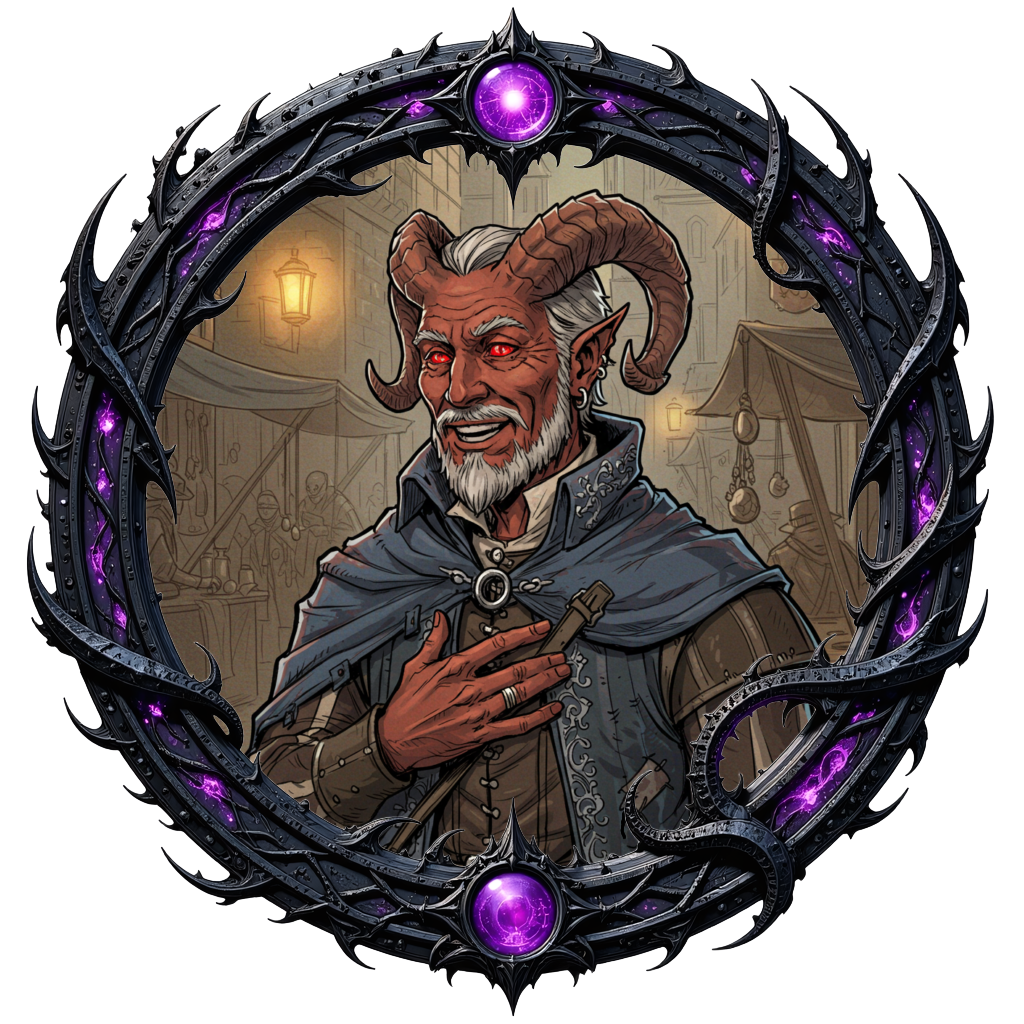
Var Maldur, a resilient yet beleaguered nation in western Tessix, is defined by its dramatic landscapes and the unyielding spirit of its predominantly Tiefling population. Stretching across diverse terrains, from fertile crimson valleys to mist-veiled mountains, Var Maldur once thrived as a beacon of trade and arcane craftsmanship. Now, under the oppressive occupation of the Tandekutaar Dragonborn Empire, its national identity burns with defiance and a yearning for freedom. The nation’s roughly 500,000 inhabitants, primarily Tieflings with pockets of Dragonborn, Kobolds, Orcs, Kenku, and Goblinoids, live under the ceremonial rule of King Uxl Ulla, though true authority rests with Tandekutaar’s military. Influential groups like the Rakaz’Torath artisans, crafting coveted magical artifacts, and the shadowy Hellfire Syndicate, balancing rebellion and aid, shape a society teetering between resilience and unrest. The war’s aftermath has driven nearly 20,000 Tiefling refugees to flee, with 15,000 enduring an 8,000-mile journey to the distant Delphian Vale, seeking safety far from their homeland’s turmoil.
In Lillowen, Var Maldur is both a land of faded glory and a spark of potential. Renowned for its exotic spices, rare gems, and mystical relics, it draws merchants and adventurers despite its volatility. Neighboring nations view it with a mix of caution and intrigue—some see a strategic partner in its vital trade routes, others a brewing rival fueled by suppressed rebellion. The heavy Tandekutaar presence and rumors of secretive groups like the Gorrzhath-Mirath cast a shadow, warning outsiders of risks amid opportunities. Yet, Var Maldur’s mystique endures, rooted in its people’s stubborn hope to restore their sovereignty, making it a land where ambition and danger intertwine.
Var Maldur’s diverse terrain shapes its identity as a land of resilience and opportunity in western Lillowen. Spanning rugged cliffs, fertile valleys, and mist-shrouded peaks, its geography ranges from the crimson-tinted Xal’Korith valley, where fertile soils yield abundant spices, to the icy Thal’Goroth River, which carves a strategic trade route through its frosty currents. The perilous Luth’Zara pass, with its jagged cliffs, guards the nation’s heart, hindering invasions but challenging traders. The Altus Cacumen Mountains, tower over the Mists of Teth, where warm coastal air meets cold mountains, creating a mystical fog that shields smugglers and rebels. The Black Sands yield rare gems, fueling Var Maldur’s economy despite Tandekutaar’s oversight. These features drive trade through coastal ports like Kethar and Port Valtor, while the harsh terrain fosters a defiant spirit, bolstering Var Maldur’s reputation as a land of enduring potential.
The nation’s geography both aids and hinders its development under occupation. The Phor’Zal Islands off the northern coast harbor exotic resources, attracting adventurous merchants, while the Vhaal Duz shorelines support robust fisheries and shipbuilding, vital for clandestine trade defying Tandekutaar’s control. The Ur’Zulgoth region’s blue-hued ice fortifies port cities, serving as natural defenses against external threats. These landscapes, rich with resources yet fraught with challenges, define Var Maldur's role as a contested yet coveted hub in Lillowen, where natural barriers and fertile lands sustain hope for independence.
Notable Sites
-
Thal’Goroth (The White River): This icy river, shimmering with a pale hue, is a vital trade artery connecting Port Valtor to inland markets. Its floating shards and misty veil conceal smugglers’ routes, symbolizing Var Maldur’s covert resistance against Tandekutaar’s iron rule.
-
Xal’Korith (The Burning Valley): A crimson-soiled valley renowned for its fertile fields, producing exotic spices that fuel Var Maldur’s trade. Sacred to Tieflings, its ancient shrines host secret rituals of the Gorrzhath-Mirath, whispering prophecies of liberation under the setting sun’s fiery glow.
-
Luth’Zara (The Crimson Pass): A treacherous pass with jagged cliffs, its crimson hues glow at sunset. Used by Hellfire Syndicate for ambushes, it’s a strategic choke point thwarting Tandekutaar patrols, embodying Var Maldur’s unyielding defiance and its history of guerrilla resistance.
-
Valtor Bridge (Port Valtor): Spanning the Thal’Goroth, this iconic stone bridge links Port Valtor to trade routes. Its fortified towers, built by ancient Tieflings, stand as a symbol of past glory, now watched by Tandekutaar guards wary of rebel gatherings.
-
Kethar Lighthouse (Kethar): A towering beacon guiding ships to Kethar’s vibrant port, its enchanted flame burns with ancient Tiefling magic. A cultural landmark, it hosts clandestine meetings of the Zerath’Mirun, fostering hope amid Tandekutaar’s occupation.
Var Maldur operates as a hollow monarchy under King Ula Uxl Ulla, a ceremonial figurehead stripped of true power by the Tandekutaar occupation, which imposes martial law from the capital, Kurnthax. The Dragonborn Empire, led by Lord Emperor Ciccindruk Balkax, enforces control through appointed officials like Chancellor Aphaad Ardorim and Viceroy Cuulrel Eshfyire, who oversee economic exploitation and civilian administration, respectively. The Rivaz’thaal elites, once central to governance, now navigate a puppet state, with Rivaz’Thunnal merchants wielding economic influence through sanctioned trade in Ruby Ravine Gems and Enchanted Relics, though suspected of smuggling to fund resistance. Internal rebellions, led by the Hellfire Syndicate and Zerath’Mirun, erupt in Luth’Zara and Ur’Zulgoth, using guerrilla tactics against Dragonborn Draktharr Vos patrols, fueled by resentment over heavy taxes and suppressed arcane arts. Diplomatic tensions with Tessix's theocratic nations, wary of Var Maldur’s fiendish worship, limit alliances, though covert ties with the Delphian Vale provide aid via Vhaal Duz. The Hand of Mercy, guided by Elura Torrin Thyr, smuggles supplies, bolstering resistance but risking Dragonborn crackdowns. These conflicts shape a fractured national unity, with Tandekutaar’s decrees stifling dissent and Kurnthax’s crumbling infrastructure symbolizing lost sovereignty, while rebels and merchants maneuver to reclaim influence.
The occupation’s iron grip, enforced by General Ixenath Ravohadur, suppresses civil liberties, with public protests in Kurnthax swiftly quelled, driving many Tieflings to flee to the Phor’Zal Islands or live in secrecy. Mistress Sarveia Nirith’s Verum Inquisitors, loyal to Tiamorathis, regulate magic, clashing with Gorrzhath-Mirath prophets who preach a Tiefling messiah, fueling underground unrest. Var Maldur’s standing in the Charred Coast is weakened by its subjugation, with Sss’vraelthian Tethys exploiting the chaos for slave raids, further isolating the nation. King Uxl Ulla’s diplomatic efforts, rooted in his unyielding hope for his people, rally hope through speeches, but his limited power underscores Var Maldur’s struggle. The Brimstone Barter Society and Rivaz’Thunnal skirt Tandekutaar’s tariffs, sustaining a black market that funds militias, while internal divides between collaborators and rebels threaten cohesion. This dynamic, shaped by Tandekutaar’s military dominance and Var Maldur’s defiant spirit, defines a nation teetering between submission and rebellion, its governance a shadow of its former arcane might.
Notable Officials
-
Ula Uxl Ulla (Tiefling, King, Kurnthax): Ceremonial monarch, uses diplomacy and hopeful speeches to rally Tieflings, seeking a consort to secure lineage, subtly resists Tandekutaar through cultural patronage.
-
Aphaad Ardorim (Dragonborn, Chancellor, Kurnthax): Manages economic affairs, enforces heavy taxes for Tandekutaar, oversees the Netherhall Exchange, suspected of skimming profits, stifles local commerce.
-
Cuulrel Eshfyire (Dragonborn, Viceroy, Kurnthax): Civilian administrator, feigns diplomacy to extract intelligence, enforces Tandekutaar policies, monitors Rivaz’thaal elites, distrusted by locals.
-
Ixenath Ravohadur (Dragonborn, General, Kurnthax): Commands occupation forces, maintains martial law, quells uprisings with ruthless strategy, indifferent to Tiefling suffering, strengthens Draktharr Balkax's control.
-
Sarveia Nirith (Dragonborn, Priestess, Kurnthax): Leads The Verum Inquisitors, enforces Tiamorathis worship, suppresses arcane and divine practices, her spiritual purges spark Zerath’Mirun resistance.
-
Elura Torrin Thyr (Tiefling, High Sovereign, Vhaal Duz): Guides the Hand of Mercy, smuggles aid to rebels, uses philanthropy to unify Tieflings, evades Tandekutaar surveillance, inspires hope.
-
Fyrex Fael Fin (Tiefling, High Magus, Luth’Zara): Leads Gorrzhath-Mirath, interprets messianic prophecies, drives secret resistance, collaborates with the Order of the Black Rose, risks fiendish backlash.
-
Levo Lira Lir (Tiefling, High Merchant, Valtor’Zhara): Heads Rivaz’Thunnal, controls gem and relic trade, engages in smuggling, balances Tandekutaar sanctions with Brimstone Barter Society alliances.
Kurnthax, the beleaguered heart of Var Maldur, stands as a testament to Tiefling resilience amid the oppressive shadow of Tandekutaar’s Dragonborn Empire. Nestled at the base of the Lofty Peaks, its mountainside architecture blends jagged stone spires with intricate Tiefling motifs, their once-vibrant hues dulled by occupation’s toll. The city’s four districts—Uxl Ulla District, Old City Quarter, Netherhall Exchange, and Azulon Hill—pulse with a defiant spirit. The Uxl Ulla District, named for King Ula Uxl Ulla, holds the shattered remnants of the Imperial Palace atop Mineon Hill, its crumbling obsidian towers a symbol of lost sovereignty, and the ruined Grand Cathedral, where Tieflings once gathered for sacred rites. The Old City Quarter on Sylvan Hill houses the Eclipsed Spire, a restored arcane tower where the secretive Gorrzhath-Mirath plot resistance, alongside ancient libraries whispering of Var Maldur’s scholarly past. The Netherhall Exchange, a sprawling market district, buzzes with vendors trading spices from Xal’Korith and relics crafted by the Rakaz’Torath, despite Tandekutaar’s heavy taxes. Azulon Hill, once home to elite families and the now-closed Thar Azhylkhor Zekaethus Vryss Mage Academy, retains an air of faded opulence, its manors looming over the city’s southern edge.
Kurnthax serves as Var Maldur’s political and economic nexus, though its autonomy is stifled by the Dragonborn Empire's iron grip. The city’s infrastructure, centered on the Thal’Goroth River, supports vital trade routes linking Kethar and Port Valtor, with the Hall of Flame, headquarters of the Rivaz’Thunnal, anchoring commerce amid strict oversight. The river’s flow, once a lifeline for fertile farmlands, is now exploited, its banks patrolled by Dragonborn forces under General Ixenath Ravohadur. The city’s sloping terrain and eroded walls, remnants of pre-occupation defenses, offer little protection, yet underground groups like the Hellfire Syndicate, operating from hidden lairs like Ember’s Hideout, smuggle goods and hope to the oppressed. Culturally, Kurnthax remains a beacon of Tiefling identity, with the Zerath’Mirun’s Sanctuary of Hope distributing aid and the Harmony's Embrace fostering unity. The Ashen Brotherhood, lurking in the Crypt of Shadows, adds a darker undercurrent, their forbidden rituals a whispered threat. Despite its struggles, Kurnthax embodies Var Maldur’s enduring aspirations for freedom, its streets alive with whispered rebellions and the echoes of a prouder past.
Var Maldur sustains an estimated population of 500,000, with its cultural and historical core defined by Tieflings, who dominate despite the heavy presence of Tandekutaar’s occupying forces. The population clusters in key urban centers like Kurnthax, home to 20,000 residents, and the vital trade ports of Kethar and Port Valtor, where maritime commerce thrives. Tieflings, roughly 80% of the population, are divided into distinct bloodlines: 50% Rivaz’thaal (Infernal Tieflings), 35% Gothraz’mek (Abyssal Tieflings), and 15% Rak’tuur, Mor’hir, or Tha’urloth lineages, each shaping Var Maldur’s identity through their unique magical and cultural traditions. The remaining 20% includes Dragonborn troops, primarily Draktharr Balkax and Draktharr Vos military units and their subservient Virtharr soldiers, alongside Kobolds, Orcs, Kenku, and Goblinoids, concentrated in rural outposts or as laborers in trade hubs. The Thal’Goroth River and fertile Xal’Korith valley support dense Tiefling communities reliant on spice trade and agriculture, while the Phor’Zal Islands and Vhaal Duz coastlines harbor diverse fishing and shipbuilding enclaves, often under Dragonborn oversight.
The demographic landscape is marked by tension and resilience. Rivaz’thaal Tieflings, with their ordered, hierarchical mindset, lead urban governance and commerce, particularly in Kurnthax’s Netherhall Exchange, where Thaehrim factions like Thaehrim Mammonith and Thaehrim Fieranya wield influence. Their structured approach often conflicts with the chaotic Gothraz’mek, who cluster in rugged regions like Luth’Zara and drive resistance through groups like the Hellfire Syndicate. The minority Rak’tuur, Mor’hir, and Tha’urloth Tieflings form insular communities in ports like Kethar, working as traders or seers, their marginal status breeding both distrust and adaptability. The Dragonborn occupiers, led by Draktharr Balkax and Draktharr Vos with their Virtharr subordinates, number in the thousands and are viewed with deep resentment, particularly in Kurnthax, where their military presence under figures like General Ixenath Ravohadur stifles local autonomy. Despite these divides, a shared history of subjugation fosters a fragile unity among Tieflings, with landmarks like the Eclipsed Spire and Kethar Lighthouse anchoring cultural pride. The flight of 20,000 Tiefling refugees, with 15,000 reaching the Delphian Vale 8,000 miles away, reflects the population’s desperation, yet those remaining in Var Maldur cling to their diverse heritage, fueling both internal strife and hope for liberation.
Var Maldur's cultural identity is a vibrant tapestry of defiance and resilience, rooted in the Tiefling population’s fiendish heritage and scarred by 35 years of Tandekutaar’s Dragonborn occupation. Once renowned for its multistory gothic architecture—towering spires of intricate stonework that symbolized Tiefling pride—the nation’s beloved structures, like those in Kurnthax’s Uxl Ulla District, now lie in ruins, their crumbled facades a stark reminder of lost glory. The Festival of the Nine Flames, a clandestine ritual honoring the Rivaz’thaal Tieflings’ Nine Hells lineage, unites communities through secret fire dances and oaths of liberation, while the Abyssal Nights, celebrated by Gothraz’mek Tieflings, feature chaotic displays of wild magic and defiant storytelling, hidden from Dragonborn patrols. Social hierarchies pivot on the Thaehrim, noble-like Rivaz’thaal factions such as Thaehrim Mammonith and Thaehrim Zari’elath, who wield influence through wealth and martial discipline, often clashing with the anarchic Gothraz’mek, whose rebellious spirit fuels groups like the Hellfire Syndicate. The minority Rak’tuur, Mor’hir, and Tha’urloth Tieflings, though sidelined, preserve unique traditions like dream-weaving and illusioncraft, their covert gatherings in ports like Kethar sustaining cultural threads.
The arts, once a regional envy with refined literature, poetry, theater, and sculpture, have transformed into acts of rebellion. Graffiti in Abyssal and Infernal scripts adorns ruined walls, blending patriotic fervor with subversive messages, often concealing explosive runes or written spells as anti-Tandekutaar street art—an act of defiance against stringent arcane regulations imposed by Dragonborn overseers. Tiefling music, once diverse across subspecies, now echoes themes of rebellion and national pride, its angry ballads sung in secret to stir resistance. Post-occupation, a troubling resurgence of fiendish worship has emerged, with many Tieflings seeking favor from powerful demons and devils, alarming even their kin. Agnosticism, dominant since their self-unenslavement from fiendish masters, remains widespread, though a small minority worshipping gods are seen as harmless eccentrics. The Zerath’Mirun, through initiatives like the Sanctuary of Hope, advocate for unity rooted in ancestral reverence, a stance often at odds with the troubling resurgence of fiendish worship. These cultural shifts strain Var Maldur’s diplomacy, making it a volatile ally in Lillowen, valued for its trade but feared for its rebellious undercurrents. The diaspora of 20,000 refugees, with 15,000 in Delphian Vale, bolsters external resistance networks, while underground markets and secret conservatories keep Tiefling traditions alive, defining Var Maldur as a land of suppressed brilliance and defiant hope.
Provinces of Var Maldur
Xal’Korith (Southern Var Maldur) Malakar Valthira Baalzharr
The Xal’Korith, or Burning Valley, is Var Maldur’s agricultural and spiritual core, its crimson soils yielding exotic spices that sustain trade despite Tandekutaar’s oppressive taxes. Ruled by Malakar Baalzharr of the Thaehrim Baalzharr, this Rivaz’thaal stronghold boasts nine-tiered gothic towers, now scarred by war, symbolizing order and resilience. The Sundering of the Crimson Veil, a historic defense against early Dragonborn incursions, fuels local pride, though consistent Virtharr patrols curb open rebellion. The Gorrzhath-Mirath’s secret shrines host fiendish rituals, alarming moderates but inspiring hope, while the Hellfire Syndicate smuggles relics through Zarath’Vel’s markets. Graffiti, laced with arcane runes, adorns ruined spires, rallying resistance. The Flameveil Dance, a fiery festival, mocks occupiers through coded performances, but Malakar Valthira’s pragmatic dealings with Chancellor Aphaad Ardorim spark tension with Gothraz’mek rebels, who favor chaos. Xal’Korith’s spice trade and spiritual weight make it a linchpin for Var Maldur's economy and resistance, yet its internal divides reflect the nation’s struggle between collaboration and defiance.
-
Cities of Xal’Korith
-
Zarath’Vel (Vel’Korith County): Bustling spice market with graffiti-laden ruins, hiding Hellfire Syndicate operations and Gorrzhath-Mirath shrines for fiendish rituals.
-
Thryme (Korath County): Farming hub with secret conservatories, where Tieflings train in forbidden arcane arts under ruined gothic arches.
-
Ur’Zulgoth (Northern Var Maldur) Malakar Zoryn Levistuseth
The icy Ur’Zulgoth, along the Phor’Zal Islands and Vhaal Duz coast, is a maritime bastion of shipbuilding and trade, its blue-hued ice shaping resilient fishing communities. Governed by Malakar Levistuseth of the Thaehrim Levistuseth, the province thrives despite Tandekutaar control, with ports like Kethar buzzing with covert activity. The Kethar Lighthouse, its enchanted flame a cultural icon, hosts Zerath’Mirun gatherings, uniting Rak’tuur and Mor’hir Tieflings. The Battle of the Frozen Tide, a fleeting Tiefling naval victory, fuels defiance, though shipyards now operate under the direct command of Draktharr Vos. Gothraz’mek Tieflings dominate, using chaotic magic and Mists of Teth to raid Virtharr patrols. Graffiti spells and rebellious songs echo in port alleys, while the Tide’s Wrath Festival sparks chaotic magic displays, often clashing with occupiers. Malakar Zoryn’s diplomacy with Viceroy Cuulrel Eshfyire frustrates rebels, yet Ur’Zulgoth’s coastal wealth and defiant spirit, marked by ruined gothic docks, make it a vital hub for Var Maldur's resistance and trade.
-
Cities of Ur’Zulgoth
-
Kethar (Zul’Vhaar County): Vibrant port with Kethar Lighthouse, a hub for Zerath’Mirun and graffiti-laden resistance art.
-
Port Voryn (Thal’Zul County): Shipbuilding center with ice caves hiding Gothraz’mek relics and rebel anthems.
-
Ur’Zulgoth (Northern Var Maldur) Malakar Zoryn Levistuseth
The Ur’Zulgoth, a stark coastal province along Var Maldur's northern shores, is defined by its surreal, blue-hued ice and the enigmatic Mists of Teth, where warm sea air clashes with the cold of the Lofty Peaks (Zeth’Nul Vraak). Ruled by Malakar Zoryn Levistuseth of the Thaehrim Levistuseth, this Gothraz’mek-dominant region thrives on shipbuilding and fishing, its fortified ports like Kethar’Zhul standing resilient against both elements and Tandekutaar’s Draktharr Vos patrols. The Kethar Lighthouse, a beacon for both ships and cultural gatherings, frequently hosts Zerath’Mirun rituals, uniting Rak’tuur and Mor’hir Tieflings in quiet acts of defiance. The Battle of the Frozen Tide, a fleeting Tiefling naval victory, fuels local pride, though shipyards now serve occupiers. The Tide’s Wrath Festival, a chaotic Abyssal celebration, features wild magic and rebellious songs, often sparking clashes with Virtharr troops. Graffiti in Abyssal script, hiding explosive runes, adorns ruined gothic docks, reflecting resistance against arcane restrictions. The Ashen Brotherhood’s Lair of Sorrow in the Mists of Teth hosts dark fiendish rituals, alarming even Gothraz’mek locals. Malakar Zoryn’s diplomatic ties with Viceroy Cuulrel Eshfyire frustrate rebels, creating tension with the Hellfire Syndicate, who use the mists for guerrilla raids. Ur’Zulgoth’s maritime wealth and defiant spirit, bolstered by the Hand of Mercy’s covert aid through Kethar’Zhul, make it a vital hub, yet its fiendish worship and internal divides strain its alignment with King Uxl Ulla’s cautious national strategy, embodying Var Maldur's struggle between survival and rebellion.
- Cities of Ur’Zulgoth
- Kethar’Zhul (Zul’Vhaar County): Fortified port with enchanted lighthouse, hub for Zerath’Mirun rituals and Abyssal graffiti hiding rebel spells.
- Voryn’Ghezz (Thal’Zul County): Shipbuilding stronghold with ice caves concealing Gothraz’mek relics and defiant anthems.
Luth’Zara (Western Var Maldur) Malakar Kreshar Glaszakh
The Luth’Zara, known as the Crimson Pass, is a rugged, scorching region of rocky hills and deep canyons in western Var Maldur, pivotal for its strategic canyon linking Vokul Slen to Xal’Korith. Ruled by Malakar Glaszakh of the Thaehrim Glaszakh, this Gothraz’mek-dominated province embodies Tiefling defiance through its harsh terrain and rebellious spirit. Its cultural significance lies in its role as a haven for the Hellfire Syndicate, whose Fiery Cavern hideout serves as a base for guerrilla raids against Tandekutaar’s Draktharr Vos and Virtharr patrols. The Starlight Enclave, a concealed workshop of the Brotherhood of the White Star, crafts enchanted relics, preserving Tiefling heritage. The Battle of Luth’Zara, a devastating Tiefling defeat where Lord Dremandrellus Balkax lost his arm, cemented the region’s martial legacy, its ancient ruins now adorned with Abyssal graffiti hiding explosive runes as acts of defiance. The Crimson Dirge, a secret festival of mournful songs and chaotic magic, honors fallen warriors, stirring patriotic fervor. Internal tensions arise from Malakar Kreshar’s covert deals with Viceroy Cuulrel Eshfyire, which Gothraz’mek clans view as betrayal, preferring open rebellion. The province’s sparse Rivaz’thaal population, centered in Ravengorge, clashes with the chaotic majority, while Rak’tuur Tieflings act as elusive scouts. Luth’Zara’s resistance strains its ties with the national government, as King Ula Uxl Ulla urges caution, yet its strategic value and defiant culture make it a crucible for Var Maldur's fight for freedom.
- Cities of Luth’Zara
- Ravengorge (Zara’Vhul County): Fortified Tiefling town with graffiti-laden ruins, a Hellfire Syndicate stronghold plotting raids against Dragonborn forces.
- Ashenhold (Kral’Zara County): Remote settlement with Starlight Enclave, where Brotherhood of the White Star crafts relics in secret.
Phor’Zal Islands (Northern Var Maldur) Malakar Syrenna Tha’urloth
The Phor’Zal Islands, a temperate cluster off Var Maldur's northern coast, are renowned for exotic fauna and volcanic activity, shaping a vibrant yet ruthless trade culture. Governed by Malakar Tha’urloth of the Thaehrim-aligned Tha’urloth Tieflings, the province thrives on the cunning and negotiation prowess of Tha’urloth] and [[Rak’tuur Tieflings, whose cutthroat dealings dominate maritime commerce. The islands’ volcanic springs inspire the Emberflow Rite, a festival where traders offer enchanted goods to fiendish spirits, reflecting a troubling rise in fiendish worship. The Siege of Coralspire, a failed Tiefling defense against Draktharr Balkax, left gothic ruins now covered in Infernal graffiti, concealing spells for smuggling operations. Rak’tuur Tieflings, with their illusory magic, facilitate clandestine trade through Voryn’s Veil, evading Virtharr blockades. Tensions stem from the islands’ pragmatic collaboration with Chancellor Aphaad Ardorim, which angers Gothraz’mek exiles seeking rebellion. Malakar Syrenna balances trade wealth with covert support for the Zerath’Mirun, whose safehouses distribute aid. The islands’ economic importance strengthens Var Maldur's position in Lillowen, but their fiendish rituals and ruthless trade practices alienate traditionalists, making Phor’Zal a paradox of prosperity and moral ambiguity in the national struggle.
-
Cities of Phor’Zal Islands
-
Voryn’s Veil (Zal’Phor County): Thriving trade port with volcanic markets, where Rak’tuur smugglers hide goods using illusory graffiti.
-
Coralspire (Thryz’Phor County): Ruined gothic city with fiendish shrines, a hub for Tha’urloth trade and covert Zerath’Mirun activity.
-
Vhaal Duz (Midwestern Var Maldur) Malakar Thryme Baalzharr
The Vhaal Duz, encompassing Var Maldur's midwestern shorelines, is renowned for its fisheries and shipbuilding, centered around the strategic Port Valtor. Ruled by Malakar Baalzharr of the Thaehrim Baalzharr, this Rivaz’thaal-led province thrives on trade, its Valtor Bridge connecting commerce across the Thal’Goroth (White River). Tha’urloth Tieflings dominate as intermediaries, their cunning ensuring gemstones from Ruby Ravine fetch premium prices abroad, often via covert docks like Abyssal Docks and Wishsong Wharf, used by the Brotherhood of the White Star for artifact smuggling. The Harbor’s Embrace facilitates Hand of Mercy aid, and the Scaled Portico aids the Brimstone Barter Society in their operations. Gothic fortifications, remnants of the brutal Siege of Valtor, are now covered in Infernal graffiti, often encoding spells as acts of defiance. The Ravine’s Bounty festival, a blend of trade and fiendish offerings, reflects the changing spiritual landscape, unsettling traditionalists. Tensions flare between Rivaz’thaal elites and Gothraz’mek fishers, who resent Malakar Thryme’s collaboration with Chancellor Aphaad Ardorim to maintain trade routes. Rak’tuur Tieflings frequently bolster the underground markets, though their ruthless dealings spark distrust. Vhaal Duz’s economic prowess strengthens Var Maldur's position in Lillowen, yet its pragmatic governance and fiendish leanings create friction with the national resistance, mirroring the nation’s broader struggle for identity and freedom.
- Cities of Vhaal Duz
- Valtor’Zhara (Duz’Vhal County): Strategic port with Valtor Bridge, hub for Tha’urloth trade and rebel graffiti spells.
- Ghez’Thryme (Ravine’Duz County): Fishing town with covert Abyssal Docks, smuggling artifacts for Brotherhood of the White Star.
Var Maldur's spiritual landscape is a turbulent crucible of Tiefling agnosticism, resurgent fiendish worship, and suppressed minority faiths, forged by centuries of liberation from demonic and infernal masters and scarred by 35 years of Tandekutaar’s oppressive occupation. The Ashen Revolt, a mythic uprising against fiendish overlords, birthed a fierce agnosticism among the Rivaz’thaal and Gothraz’mek Tieflings, who rejected divine or infernal servitude in favor of arcane mastery and self-reliance. This ethos, celebrated in the Festival of the Nine Flames, where bonfires symbolize their emancipation, permeates daily life, with Tieflings valuing independence over devotion. Yet, the Tandekutaar occupation, enforced by Draktharr Balkax and Draktharr Vos, has driven a schism, reviving worship of archdevils like Moloch and Zariel among desperate rebels seeking power to resist. Secret shrines in Xal’Korith’s ruby-soiled valleys and Luth’Zara’s shadowed canyons host blood-soaked rituals led by the Ashen Brotherhood and Thaehrim Zari’elath, where fiery offerings and oaths in Infernal seek fiendish aid. The Crimson Dirge, a clandestine festival banned by Dragonborn overlords, blends mournful chants with pleas for vengeance, its melodies echoing in Hellfire Syndicate hideouts. Superstitions—avoiding mirrors at night to evade Rakshasa spirits or whispering Graz’zt’s name for favor—shape daily fears, while taboos against speaking divine names aloud reflect Tandekutaar’s crackdown on non-fiendish faiths. A small Rak’tuur minority clings to Luminara, their candlelit shrines hidden in Phor’Zal Islands, mocked as naive but tolerated, deepening societal rifts that strain diplomacy with Lillowen’s theocratic nations, who view Var Maldur's volatile spirituality with suspicion.
The Tandekutaar occupation has forced most spiritual practices underground, with Draktharr Vos and Draktharr Balkax branding organized religion subversive, outlawing public rituals like Abyssal Nights, where Tieflings once danced under starlight to honor ancestral freedom. The Obsidian Temple of Moloch, nestled in Ur’Zulgoth’s fog-shrouded Mists of Teth, is a volcanic sanctum where Ashen Brotherhood zealots offer blood sacrifices to Moloch, a tyrannical archdevil whose molten altar promises power but curses traitors with betrayal. Similarly, Zariel’s martial cults, led by Thaehrim Zari’elath in Luth’Zara, forge enchanted blades through rites of war, their fervor fueling Zerath’Mirun resistance but alarming moderates who fear re-enslavement to infernal pacts. The Shrine of the Crimson Veil in Xal’Korith, a gothic ruin tied to the Sundering of the Crimson Veil, draws Gorrzhath-Mirath prophets who preach fiendish prophecies of rebellion, clashing with Zerath’Mirun’s ancestral reverence at the Starlight Enclave, a crystalline cave in Luth’Zara believed to shield against demonic corruption. The Hand of Mercy, a covert network delivering aid through Vhaal Duz, embodies a rare benevolent faith, smuggling supplies to sustain resistance. Yet, fiendish worship dominates, with Graz’zt’s hedonistic cults in Ur’Zulgoth weaving illusory art and deceitful pacts, sowing distrust even among allies. These spiritual divides, between rebels embracing fiendish power and agnostics guarding their hard-won freedom, shape Var Maldur's laws, resistance, and identity, making faith as contested a battlefield as Kurnthax’s crumbling walls, with the nation torn between defiance and the specter of infernal servitude.
eities of Var Maldur
-
Moloch (Lawful Evil, Tyranny and Sacrifice): A malevolent archdevil revered in Xal’Korith’s secret shrines, Moloch demands blood sacrifices for power. Gothraz’mek rebels and the Ashen Brotherhood followers offer fiery tributes in The Lair of Sorrow, seeking strength against Tandekutaar. His displeasure brings betrayal and ruin, feared by pragmatists who shun his tyrannical influence, believing it risks re-enslavement.
-
Zariel (Lawful Evil, War and Vengeance): This infernal warlord inspires Rivaz’thaal warriors with promises of vengeance. Worshipped through martial rites in Luth’Zara, her followers, including Thaehrim Zari’elath, forge enchanted blades. Her wrath curses betrayers with endless rage, uniting rebels but alarming moderates wary of her destructive zeal.
-
Luminara (Neutral Good, Light and Hope): A benevolent goddess worshipped by a small Tiefling minority in Phor’Zal Islands, Luminara offers hope through secret candlelit prayers. Her followers, often Rak’tuur, face ridicule but gain resilience. Her displeasure dims courage, and her rare shrines are hidden from Virtharr patrols enforcing arcane bans.
-
Graz’zt (Chaotic Evil, Deception and Pleasure): A seductive demon prince revered by Gothraz’mek in Ur’Zulgoth, Graz’zt is appeased with hedonistic rites and illusory art. Rak’tuur spies offer secrets to gain his favor, but his fickle nature brings betrayal, sowing distrust among worshippers and rebels alike.
Holy Sites of Var Maldur
-
Obsidian Temple of Moloch (Mists of Teth, Ur’Zulgoth): Hidden in the foggy Mists of Teth, this blackened shrine is a sacred site for Ashen Brotherhood rituals to Moloch. Its volcanic altar, etched with blood runes, is said to grant power but curse traitors with betrayal. Legends claim it hides a portal to the Nine Hells, drawing rebels and fiend-worshippers.
-
Shrine of the Crimson Veil (Xal’Korith): Nestled in Xal’Korith’s ruby-soiled valley, this ruined gothic shrine commemorates the Sundering of the Crimson Veil. Gorrzhath-Mirath prophets perform fiery rites here, seeking fiendish visions. It’s said to bless resistors with arcane might but curse collaborators with madness, a symbol of Tiefling defiance.
-
Starlight Enclave (Luth’Zara): A concealed cave in the Crimson Pass, this Brotherhood of the White Star sanctuary glows with star-like crystals. Used for crafting relics and ancestral rites, it’s believed to shield worshippers from fiendish influence. Legends warn its light reveals hidden truths, drawing adventurers seeking lost Tiefling lore.
Var Maldur's economy, once a maritime titan, now limps under Tandekutaar’s iron grip, its resources plundered and infrastructure in tatters after the Dragon Devil War. The Netherhall Exchange in Kurnthax, a tightly regulated hub, sees Rivaz’thaal elites negotiate under duress, while Rak’tuur intermediaries slip goods to coastal ports. Trade overland via the Crimson Pass to Tandekutaar is heavily restricted, with Lofty Peaks blocking other routes, forcing reliance on regulated sea trade through Vhaal Duz. Civil unrest and a widespread neglect of infrastructure, including Kurnthax’s decaying city wall, disrupt production, while opportunists and rebels divert resources, deepening economic woes. The fertile Xal’Korith valley yields exotic spices, while Vhaal Duz and Phor’Zal Islands fisheries sustain the population, though much of the surplus is diverted by the occupying forces for imperial coffers, leaving Tieflings rationing essentials. Ruby Ravine’s gemstones, mined by cunning Tha’urloth Tieflings, are smuggled through hidden docks like Abyssal Docks and Wishsong Wharf to evade heavy tariffs, sustaining a vital black market. This clandestine trade is largely spearheaded by groups like the Hellfire Syndicate and Brimstone Barter Society, who also channel vital arms and supplies to resistance movements. Despite Tandekutaar’s stranglehold, Var Maldur maintains precarious trade ties. Delphian Vale, hosting 15,000 Tiefling refugees, trades aid for spices and gems via covert sea routes, bolstering resistance. Aerlon’s proximity offers potential, but High Elves’ communistic policies limit robust exchange, though Tha’urloth secure deals for artifacts. Unscrupulous Tieflings trade slaves with Sss’vraelthian Tethys’s Yuan-ti, fueling resentment, while limited commerce with Maldovarrian Colonies and Bast-Neferrah persists through smuggled goods. The Hand of Mercy’s aid via Harbor’s Embrace sustains underground markets, but Tandekutaar’s tariffs and blockades choke prosperity, making black-market trade a defiant lifeline shaping Var Maldur's strained diplomacy with Lillowen.
Notable Trade Goods
-
Xal’Korith Spices (Export): Fiery, rare spices from Xal’Korith’s crimson soils, coveted in Lillowen for arcane and culinary uses, smuggled to evade Tandekutaar taxes, critical for survival.
-
Ruby Ravine Gems (Export): Vibrant rubies and amethysts from Vhaal Duz, prized for enchantments, smuggled by Tha’urloth, vital for black-market wealth despite Dragonborn seizures.
-
Enchanted Relics (Export): Arcane artifacts from Luth’Zara’s Brotherhood of the White Star, sought by Aerlon mages, fund resistance through covert trade networks.
-
Blue-Ice Timber (Export): Durable wood from Ur’Zulgoth’s icy forests, used for ships, smuggled to Maldovarrian Colonies, sustaining coastal economies under heavy taxes.
Major Trade Partners
-
Tandekutaar: Occupiers extort spices, gems, and labor for Klyrvaxor hides and meat, dominating trade via the Crimson Pass, fueling resentment but filling imperial coffers.
-
Delphian Vale: Trades aid and intelligence for smuggled spices and gems, supporting Var Maldur's resistance through covert sea routes, wary of Tandekutaar’s reach.
-
Aerlon: Limited trade of enchanted artifacts for froststone jewelry, constrained by High Elves' communistic policies, yet vital for Tha’urloth-driven deals.
-
Sss’vraelthian Tethys: Unscrupulous Tieflings trade slaves for Yuan-ti venoms and animals, a despised practice strengthening black markets but sparking internal outrage.
Var Maldur's military, once a formidable force of arcane spellcasters and a dominant naval power, lies crippled under Tandekutaar’s occupation, its army disbanded and defenses reliant on Dragonborn forces. The nation’s few remaining official units, like the Xul’Kha’Zhara, operate under strict Dragonborn oversight, tasked with coastal patrols but stripped of arcane potency. Most resistance comes from covert militias and freedom fighters, such as the Hellfire Syndicate and Zerath’Mirun, who wage guerrilla warfare from Luth’Zara’s canyons and Ur’Zulgoth’s mists, using Abyssal graffiti to conceal explosive runes. Kurnthax’s crumbling city wall, riddled with weak points, offers little protection, neglected by Tandekutaar’s focus on control over fortification. The Valtor’Zhara port, while heavily monitored, serves as a crucial point for the Brimstone Barter Society to channel covert arms and aid to rebel factions. Var Maldur's maritime trade routes, once secured by a mighty fleet, are now policed by Tandekutaar galleys, leaving coastal defenses vulnerable. Alliances with Delphian Vale provide covert aid, smuggled through Vhaal Duz, but the Lofty Peaks block land-based support, isolating Var Maldur. Internal threats from civil unrest and external pressures from Tandekutaar’s police state shape a doctrine of stealth and sabotage, with resources diverted to black-market arms, reflecting the nation’s desperate bid for sovereignty.
The Hand of Mercy delivers supplies to bolster resistance, but Tandekutaar’s surveillance stifles open rebellion. Sss’vraelthian Tethys’s Yuan-ti pose a secondary threat, raiding for slaves, met with fierce Tiefling ambushes. Var Maldur's defenses hinge on its rugged geography, like Crimson Pass, and the cunning of Rak’tuur and Tha’urloth Tieflings, who exploit arcane relics and hidden docks. This fragmented military posture, driven by economic ruin and Chancellor Aphaad Ardorim’s policies, prioritizes survival over conquest, with freedom fighters embodying the nation’s defiant will against overwhelming odds.
Military Leaders
-
Xar’Vyx’Thar (Zhara’Keth of the Hellfire Syndicate): A cunning Gothraz’mek leader, Xar’Vyx’Thar orchestrates guerrilla raids from Luth’Zara, using illusory magic and explosive runes. Infamous for ambushing Virtharr patrols, his reckless tactics inspire rebels but risk civilian lives, fueling tension with Thaehrim.
-
Zyra’Kha’Val (Malakar of Vhaal Duz): A Tha’urloth strategist, Zyra’Kha’Val directs covert smuggling in Valtor’Zhara, arming militias via the Abyssal Docks. Her diplomatic deals with Delphian Vale secure aid, but her collaboration with Tandekutaar draws rebel ire.
-
Fyn’Zyra’Tor (Zhara’Ghez of Zerath’Mirun): A Rak’tuur commander, Fyn’Zyra’Tor leads secret militias in Ur’Zulgoth, using Mists of Teth for ambushes. Known for uniting disparate clans, his victories against Draktharr Vos inspire hope, though fiendish pacts stir unease.
Notable Military Units
-
Xul’Kha’Zhara: Official Rivaz’thaal coastal guard under Tandekutaar, patrolling Vhaal Duz with weakened arcane skills. Their disciplined spear formations, once fearsome, now serve oppressors, resented by rebels for enforcing blockades, allied uneasily with Draktharr Vos.
-
Ghezz’Vyx’Keth: Hellfire Syndicate freedom fighters in Luth’Zara, Gothraz’mek Tieflings wielding relics and chaotic magic. Feared for fiery ambushes, they sabotage Virtharr outposts, rivaling Thaehrim for their reckless defiance, operating from Fiery Cavern.
-
Zhara’Mir’Thal: Zerath’Mirun militia of Rak’tuur and Mor’hir in Ur’Zulgoth, masters of stealth in the Mists of Teth. Their illusion-laced guerrilla tactics disrupt Draktharr Balkax, allied with the Hand of Mercy, but clash with fiend-worshipping Ashen Brotherhood.
-
Kha’Ryn’Zhul: Secret Tha’urloth smugglers in Vhaal Duz, operating from Wishsong Wharf. Skilled in covert raids, they steal Tandekutaar supplies, using Infernal runes to arm rebels, allied with the Brimstone Barter Society, distrusted by traditionalists.
Var Maldur's national symbols embody its resilient spirit, arcane heritage, and defiant struggle against Tandekutaar’s occupation, weaving together the Tiefling people’s pride and their tumultuous history. The Crimson Flame Banner, a blood-red flag bearing a jagged black flame wreathed in nine silver sparks, stands as the nation’s primary emblem, symbolizing the Rivaz’thaal and Gothraz’mek Tieflings’ fiery defiance and their ancestral ties to the Nine Hells. Originating during the self-unenslavement from fiendish masters, the banner’s sparks honor the Festival of the Nine Flames, a clandestine rite where Tieflings swear oaths of freedom over bonfires, forbidden under Dragonborn rule. Displaying the banner publicly risks severe punishment, so rebels paint its image in Abyssal graffiti, embedding arcane runes to signal resistance. The Obsidian Horn, a carved relic shaped like a curved Tiefling horn, represents resilience and arcane might, often worn as a pendant by Zerath’Mirun members. Crafted from Ruby Ravine obsidian, it’s etched with Infernal script and revered in secret ceremonies, with a taboo against touching it with bare hands to preserve its mystical purity.
The Starlit Veil, a stylized constellation depicted as a silver cloak across a crimson field, symbolizes hope and unity, inspired by the Starlight Enclave in Luth’Zara. It reflects the Rak’tuur and Mor’hir Tieflings' dream-weaving traditions, believed to shield the nation from fiendish corruption. Displayed in covert gatherings, its creation involves a ritual where starlight is captured in crystal, a practice banned by Tandekutaar. The Thal’Goroth Anchor, an iron anchor etched with waves, represents Vhaal Duz’s maritime legacy, once a symbol of naval dominance now hoisted in defiance at Valtor’Zhara’s hidden docks. Its display during the Ravine’s Bounty festival invokes ancestral strength, with a taboo against letting it touch foreign soil, symbolizing Var Maldur's unyielding claim to sovereignty. These symbols, born from legendary victories like the Sundering of the Crimson Veil and tempered by occupation, unify the nation’s identity, rallying Tieflings against oppression while preserving their arcane and cultural heritage.
The origins of Var Maldur trace back to the ancient arrival of the Rivaz’thaal Tieflings, who emerged from the Lower Planes during the tumultuous Blood War, a cosmic conflict that birthed their infernal heritage. Led by figures like Zyx Zor Zhara, Kar Kal Kathis, and Yri Yma Ythos, these Tieflings were enslaved by fiendish overlords, tasked with forging fortifications and arcane relics along the Charred Coast. Their resilience sparked a covert rebellion, planting the seeds of defiance that defined Var Maldur's identity. Settling in the rugged landscapes of what would become Vhaal Duz and Ur’Zulgoth, they established isolated communities, living for centuries without contact with other sentient races. The Ruby Ravine, with its gem-laden cliffs, became a sacred site, its shimmering stones symbolizing their hard-won freedom. The Zerath’Mirun, a cultural movement, emerged to preserve their arcane traditions, centered around the Starlight Enclave in Luth’Zara. These early settlers formed a loose confederation under Thaehrim leaders, with no formal king, relying on councils of spellcasters to govern. This era of isolation forged a fiercely independent spirit, reflected in the Crimson Flame Banner, a symbol of their emancipation from fiendish chains.
The Ashen Revolt, a pivotal uprising against their infernal overlords, marked Var Maldur's true founding as a nation. The revolt, ignited by the Rivaz’thaal and bolstered by Gothraz’mek Tieflings, saw the destruction of devilish strongholds along the Charred Coast. The Sundering of the Crimson Veil, a legendary event where Tiefling mages shattered a fiendish portal in Xal’Korith, became a cornerstone of national pride, commemorated at the Shrine of the Crimson Veil. This victory established King Xar Xul Xoryn as the first monarch, who unified the clans under a centralized arcane council in Kurnthax. The Obsidian Horn, crafted from Ruby Ravine obsidian, emerged as a relic of resilience, worn by leaders during coronation rites. The nation’s early governance balanced arcane might with communal traditions, with Tha’urloth traders leveraging the Valtor Bridge to establish Var Maldur as a maritime power. The Mists of Teth in Ur’Zulgoth, believed to hide ancient portals, became a site of mystical lore, whispered to guard secrets of their fiendish ancestry.
As Var Maldur grew, its maritime dominance expanded through strategic trade networks across the Jaded Sea. The Vhaal Duz ports, particularly Valtor’Zhara, became hubs for exporting Xal’Korith Spices and Ruby Ravine Gems, fostering wealth and influence. The Thal’Goroth Anchor, a symbol of naval prowess, adorned ships that rivaled those of distant Lillowen powers. This era saw the rise of the Brotherhood of the White Star, a secretive order crafting enchanted relics in Luth’Zara, strengthening Var Maldur's arcane reputation. Alliances with the Maldovarrian Colonies solidified trade routes, though tensions simmered with Tandekutaar, a Dragonborn nation envious of Var Maldur's naval supremacy. The Festival of the Nine Flames, a rite honoring their infernal liberation, became a national celebration, with bonfires lit across Kurnthax and Ghez’Thryme. However, internal divisions between Rivaz’thaal elites and Gothraz’mek commoners sparked debates over governance, with some advocating for a stronger monarchy, setting the stage for future reforms.
The first major conflict with Tandekutaar, centuries before the Dragon Devil War, arose from maritime rivalries. Var Maldur's powerful navy, led by Zyra Zyx Zhul, repelled Dragonborn incursions along the Charred Coast, securing a peace treaty that favored Tiefling trade dominance. This victory entrenched the Xul’Kha’Zhara naval guard as a symbol of national pride, their ships adorned with the Starlit Veil. The treaty, however, sowed resentment in Tandekutaar, whose weaker navy chafed under Var Maldur's control of key sea routes. Internally, the Thaehrim consolidated power, establishing King Yri Yul Ythar’s dynasty, which built the fortified Maldur Keep to guard Luth’Zara’s trade routes. The Obsidian Temple of Moloch, hidden in the Mists of Teth, emerged as a controversial site, with Ashen Brotherhood rituals stirring fears of fiendish resurgence among traditionalists. This period of prosperity and tension shaped Var Maldur's identity as a nation of arcane might and maritime strength, though it planted seeds of future conflict.
The Dragon Devil War, a catastrophic clash with Tandekutaar, reshaped Var Maldur’s destiny. Sparked by a trade dispute over the highly prized spices from Xal’Korith and gems from Ruby Ravine, Tandekutaar accused Var Maldur of unfair practices, imposing a crippling embargo. King Uxl Ulla responded with naval patrols, sinking Dragonborn ships, but Tandekutaar’s ground forces, led by Lord Emperor Ciccindruk Balkax, proved relentless. The Battle of Trinex Ahraanir saw Lord Dremandrellus Balkax crush Tiefling forces, bolstered by the Cracked Shield Warband, despite Var Maldur’s arcane superiority. The Battle of Luth’Zara further weakened the Tieflings, with Lord Balkax’s injuries leading to cautious tactics in the Siege of Maldur Keep. General Gulxos Kess’s strategic brilliance secured Tandekutaar’s victory, breaching the keep’s arcane defenses. The Battle of Vokul Slen, where Draktharr Vos and the mysterious Grim dominated, opened the White River path to Kurnthax, which fell to occupation. This war devastated Var Maldur’s navy and arcane universities, with looted tomes and captured spellcasters forced to train Dragonborn mages, shifting Tandekutaar’s culture toward magic.
The fall of Kurnthax marked Var Maldur’s subjugation, with Tandekutaar establishing a puppet government under Chancellor Aphaad Ardorim. The Xul’Kha’Zhara, once a proud naval force, was reduced to a coastal guard under Draktharr Vos control, enforcing blockades. Kurnthax’s city wall, neglected by occupiers, crumbled, symbolizing the nation’s vulnerability. The Hellfire Syndicate and Zerath’Mirun emerged as freedom fighters, using Luth’Zara’s canyons and Ur’Zulgoth’s mists for guerrilla warfare, with Abyssal Docks smuggling arms. The Hand of Mercy funneled aid through Vhaal Duz, sustaining resistance. However, Tandekutaar’s police state, enforced by Draktharr Balkax, stifled open rebellion, with public displays of the Crimson Flame Banner banned. The occupation spurred a cultural shift, with fiendish worship resurging among Gothraz’mek Tieflings, who revered Moloch and Zariel at secret shrines, alarming traditionalists. This period cemented Var Maldur’s identity as a nation of defiance, with the Starlit Veil symbolizing hope amid oppression.
A cultural revolution followed, driven by the Zerath’Mirun’s push for ancestral reverence over fiendish worship. The Starlight Enclave became a sanctuary for preserving Tiefling lore, with dream-weaving rituals reinforcing unity. The Ravine’s Bounty festival, blending trade with arcane displays, persisted in secret, defying Tandekutaar’s bans. Tha’urloth traders, operating through Wishsong Wharf, maintained covert commerce with the Maldovarrian Colonies, sustaining economic resistance. The Brimstone Barter Society’s black market thrived, smuggling Enchanted Relics to fund militias. However, internal tensions grew between Rivaz’thaal elites, who collaborated with Chancellor Aphaad Ardorim, and Obsidian Horn became a contested symbol, worn by both factions but revered differently—elites saw it as tradition, rebels as defiance. This revolution redefined Var Maldur's societal bonds, balancing arcane heritage with resistance against cultural erasure.
The ongoing occupation has shaped Var Maldur's present, with Tandekutaar’s control strangling its economy and defenses. The Altus Cacumen isolate the nation, forcing reliance on sea trade through Vhaal Duz, heavily taxed by Draktharr Vos. The Hellfire Syndicate’s raids, led by Xar’Vyx’Thar, and Zhara’Mir’Thal’s stealth tactics in the Mists of Teth keep resistance alive, though fiendish worship at the Obsidian Temple of Moloch sparks internal divides. King Uxl Ulla’s failed negotiations for independence, coupled with Sss’vraelthian Tethys’s slave raids, deepen the nation’s plight. Yet, myths of the Frozen Monarch, a legendary figure said to awaken from the Unyielding Wall, fuel hope, with prophecies claiming a descendant will restore Var Maldur. These events, from founding to occupation, have forged a nation defined by arcane resilience, maritime legacy, and an unyielding quest for freedom, its symbols and rebellions reflecting a people determined to reclaim their destiny.
Var Maldur is a subjugated nation in western Tessix under Tandekutaar occupation since the Dragon Devil War, with 500,000 inhabitants mostly Tieflings (80%: 50% Rivaz’thaal Infernal, 35% Gothraz’mek Abyssal, 15% Rak’tuur, Mor’hir, Tha’urloth) and 20% Dragonborn troops, Kobolds, Orcs, Kenku, Goblinoids. King Ula Uxl Ulla is ceremonial; real power lies with Tandekutaar officials Chancellor Aphaad Ardorim (economics), Viceroy Cuulrel Eshfyire (civil administration), General Ixenath Ravohadur (military), Priestess Sarveia Nirith (Verum Inquisitors enforcing Tiamorathis worship). Provinces include Xal’Korith (Malakar Valthira Baalzharr), Ur’Zulgoth (Malakar Zoryn Levistuseth), Luth’Zara (Malakar Kreshar Glaszakh), Phor’Zal Islands (Malakar Syrenna Tha’urloth), Vhaal Duz (Malakar Thryme Baalzharr). Capital Kurnthax (20,000 residents) has districts Uxl Ulla, Old City Quarter (Eclipsed Spire), Netherhall Exchange, Azulon Hill (closed Thar Azhylkhor Zekaethus Mage Academy); other sites: Hall of Flame, Sanctuary of Hope, Harmony’s Embrace, Crypt of Shadows, Ember’s Hideout. Geography spans Xal’Korith valley, Thal’Goroth River, Luth’Zara pass, Altus Cacumen Mountains, Mists of Teth, Black Sands, Phor’Zal Islands, Vhaal Duz shorelines, Ur’Zulgoth ice. Notable sites: Thal’Goroth, Xal’Korith, Luth’Zara, Valtor Bridge, Kethar Lighthouse. Groups: Rakaz’Torath artisans, Hellfire Syndicate rebels, Gorrzhath-Mirath prophets, Zerath’Mirun unifiers, Hand of Mercy aid smugglers, Rivaz’Thunnal merchants, Brimstone Barter Society black market, Ashen Brotherhood fiend-worshippers, Brotherhood of the White Star relic crafters, Order of the Black Rose. Additional officials: High Sovereign Elura Torrin Thyr (Hand of Mercy), High Magus Fyrex Fael Fin (Gorrzhath-Mirath), High Merchant Levo Lira Lir (Rivaz’Thunnal). Cities: Xal’Korith (Zarath’Vel, Thryme); Ur’Zulgoth (Kethar, Port Voryn, Kethar’Zhul, Voryn’Ghezz); Luth’Zara (Ravengorge, Ashenhold); Phor’Zal Islands (Voryn’s Veil, Coralspire); Vhaal Duz (Valtor’Zhara, Ghez’Thryme); ports Kethar, Port Valtor. 20,000 Tiefling refugees fled, 15,000 reaching Delphian Vale 8,000 miles away.
Culture features ruined gothic architecture, clandestine Festival of the Nine Flames, Abyssal Nights; Thaehrim factions (Mammonith, Fieranya, Zari’elath, Baalzharr, Levistuseth, Glaszakh) clash with chaotic Gothraz’mek; arts include Abyssal/Infernal graffiti with runes/spells, rebellious music. Agnosticism dominates post-Ashen Revolt self-unenslavement from fiends, but occupation revives worship of Moloch, Zariel, Graz’zt; minority Luminara. Holy sites: Obsidian Temple of Moloch (Mists of Teth), Shrine of the Crimson Veil (Xal’Korith), Starlight Enclave (Luth’Zara). Economy exports Xal’Korith Spices, Ruby Ravine Gems, Enchanted Relics, Blue-Ice Timber via black markets (Abyssal Docks, Wishsong Wharf, Harbor’s Embrace, Scaled Portico); partners Tandekutaar (extorts for Klyrvaxor hides/meat), Delphian Vale (aid), Aerlon (artifacts), Sss’vraelthian Tethys (slaves), limited Maldovarrian Colonies, Bast-Neferrah. Military crippled; official Xul’Kha’Zhara patrols under Tandekutaar; resistance Ghezz’Vyx’Keth (Hellfire Syndicate), Zhara’Mir’Thal (Zerath’Mirun), Kha’Ryn’Zhul smugglers; leaders Xar’Vyx’Thar, Zyra’Kha’Val, Fyn’Zyra’Tor. Symbols: Crimson Flame Banner, Obsidian Horn, Starlit Veil, Thal’Goroth Anchor. History: Tieflings from Lower Planes via Blood War, enslaved by fiends (Zyx Zor Zhara, Kar Kal Kathis, Yri Yma Ythos); Ashen Revolt, Sundering of the Crimson Veil founded nation under King Xar Xul Xoryn; maritime growth, alliances Maldovarrian Colonies; Dragon Devil War defeats at Battle of Trinex Ahraanir, Battle of Luth’Zara (Dremandrellus Balkax injured), Siege of Maldur Keep (Gulxos Kess), Battle of Vokul Slen (Draktharr Vos, The Grim), fall of Kurnthax; post-war puppet rule, resistance, fiendish resurgence, Zerath’Mirun cultural push; prophecies of Frozen Monarch from Unyielding Wall.
Provinces detail events: Xal’Korith (Sundering of the Crimson Veil, Flameveil Dance); Ur’Zulgoth (Battle of the Frozen Tide, Tide’s Wrath Festival); Luth’Zara (Battle of Luth’Zara, Crimson Dirge, Siege of Coralspire); Phor’Zal Islands (Siege of Coralspire, Emberflow Rite); Vhaal Duz (Siege of Valtor, Ravine’s Bounty). Additional sites: Fiery Cavern, Lair of Sorrow, Wishsong Wharf, Abyssal Docks, Harbor’s Embrace, Scaled Portico, Unyielding Wall, Maldur Keep, Sylvan Hill, Mineon Hill. Historical figures: Zyx Zor Zhara, Kar Kal Kathis, Yri Yma Ythos, Xar Xul Xoryn, Yri Yul Ythar, Zyra Zyx Zhul, Dremandrellus Balkax, Gulxos Kess, The Grim, Frozen Monarch.